

_page-0001_20260903101241.jpg)




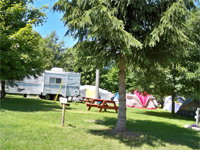
For many leisure travellers, camping nowadays may involve driving just a few kilometres from home to spend
the night in the desert in a tent ... for others it’s a more luxurious experience.
Jolene Baxman organises an annual two-night trip for a dozen mothers and their kids to a Kampgrounds of America (KOA) facility in Petaluma, California, a mere 8km from where she lives. But they do not pitch tents. They rent a lodge with a bathroom, indoor shower, kitchenette, microwave, barbecue grill, and, of course, beds. The mums take turns relaxing and making meals; the kids swim and ride their bikes. At night, they sing around a campfire and toast marshmallows.
“It’s not far from our homes, but it feels like we’re camping,” Baxman said. “We’re out in the woods; it’s very beautiful – lush trees and you don’t hear any cars around. We’re not in a tent, but it’s camping to us.”
More than half of those staying with KOA say they were at home the night before arriving at the camp ground, according to KOA CEO Jim Rogers. That’s a 25 per cent increase in seven years.
Rogers says work demands, children’s schedules, high petrol prices and other concerns are all contributing to the trend. “Families want to stay just within reach of their homes and tend to go away for shorter time periods at a time,” he said.
Rogers also said KOA has seen a 25 per cent increase in the use of roofed accommodations at their camp grounds. “It’s attracting a whole new breed of campers, people we haven’t seen before,” he said.
In Ohio, the Lazy River at Granville camp ground, 40km from Columbus, offers activities and entertainment ranging from a zipline to magic shows to arts and crafts.
For those who bring laptops and TV sets, there is wireless internet and cable service.
One of the most popular attractions at Lazy River is the ‘bug lady’, a local woman who takes visitors on a walk in the woods, where she points out different species of bugs.
“She’s the Pied Piper of bugs,” said Mark Kasper, owner of Lazy River. “She just entrances her audience.” Kasper observed that when he was young, ‘you’d go to the state park and watch a presentation with a ranger and a movie. Now it’s different. We try to have everything the modern-day person wants, and yet you’re away from the city’.
Jeff Crider, spokesman for the National Association of RV Parks and Campgrounds, said: “More and morecamp grounds across the country are offering organised activities that could range from nature walks to special themed weekend events.
“You can still find plenty of camp grounds that offer a natural setting and a nice environment for kayaking, fishing, or river tubing, but what the parks are finding is that more and more families want things to do. Fun activities are a great way to get kids away from computers and iPods and do something as a family.”
In addition, camp grounds that offer these types of activities find that people stay longer – three or four days instead
of just a weekend.
Even at more traditional camp grounds, the type of accommodation is changing.
Dawn Tosner, of Valley Stream, New York, has been going to the KOA in Herkimer, New York, for 15 years. “When we first started, we went tent camping,” she said. “We gradually started using the cabins.”
Last year, joined by friends, she tried an upgraded cabin with all the comforts of home, including a bathtub, stove and TV.
“It’s a little bit of luxury while still enjoying the outdoors,” she said. “When you go tent camping, you have to bring everything with you – sleeping bags, all the utensils, supplies. You pack up the whole car. With the cabins, you don’t need to bring as much stuff. You have more time to spend enjoying the trip.”
Even those who go the traditional route of sleeping on the ground may be spending time in a tent that has multiple rooms, with separate quarters that can be used for children or as a screened-in porch for chairs.


