

_page-0001_20260903101241.jpg)




Growing up in the Nineties and seeing the England cricket team get repeatedly walloped by the Aussies, and practically everyone else for that matter, I never thought I’d see the team in such a state of disrepute again.
The Ashes victories of 2005 and 2010/11, the former of which stands amongst my very favourite sporting moments and memories, may have given me false expectations for the long-term development of the sport and we are now merely reverting to the norm.
However, with the amount of funding available to the England and Wales Cricket Board (ECB) and the outstanding cricketing facilities in the country, how have the team’s fortunes been allowed to decline so dramatically in such a short space of time?
The statistics don’t lie.
Until Sunday England had not won any of their past eight Tests and the nine-wicket defeat by Pakistan at Lord’s last week was the first time they had lost in May since 1921.
They cannot blame luck or the conditions. They won the toss and the greenish pitch was ideal for England’s excellent seam and swing attack, although for some reason Joe Root elected to give Pakistan the first bowl on it under classic overcast skies.
But that was not the reason England were so heavily beaten. They were utterly outplayed in all departments by a Pakistan side featuring only four players who had previous experience of a Test in England.
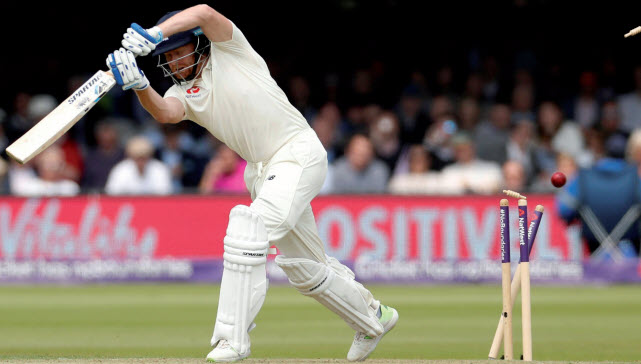
Root’s team were defeated - as they have been 13 times in the past 22 Tests - because they cannot bat.
In that time they have been dismissed 24 times for less than 300, the bare minimum for a total in five-day cricket.
The problems with the batting are, well root and branch.
The main issue is that there is no permanence about England batsmen. Apart from Alastair Cook, no-one is prepared to knuckle down and grind out runs in an unattractive but effective way.
Cook is the only batsman happy with a low-risk strategy as he just has a natural thirst for scoring runs, not matter how ‘ugly’ those runs may come. He chips away at the bowling in small chunks rather trying to take great whopping slices off it. He makes runs because he knows it his duty to do so. He is not out there for fun.
It’s a mental issue. Dogged occupation of the crease, eschewing high-risk shots, purely staying in when the bowling is very challenging or the conditions awkward - these are not skills ingrained in the vast majority of English players.
Most modern English batsmen instinctively like to dominate - this is what they have been conditioned to do. It is more enjoyable and more entertaining, but it also much riskier.
England have given debuts to 12 batsmen since 2014. Their combined average is 26. Contributions like that are not going to win Test matches.
England managed only three centuries in last winter’s five-match Ashes series. The Australians made 10. England scored only five in seven Tests against South Africa and West Indies last summer.
The trend is evident at county level too: no batsman has scored 10 hundreds in a season - or 2,000 runs - since Mark Ramprakash in 2007.
The current generation of batsmen, many of whom are reared on limited-overs cricket, like to go at the ball without properly moving their feet towards it.
That is not so easy against high-class international bowlers armed with the red Duke ball, which can swing prodigiously in the air and off the pitch.
The one-day generation have developed lazy habits. They rarely get properly forward or back with their feet, which is a monumental flaw found out at Test level.
The flip side of that is that our ODI and T20 sides are playing attacking, exciting cricket which leaves us as favourites for next year’s World Cup in England. After years of dreadful, sluggish performances in coloured jerseys while our Test team prospered, the boot is on the complete opposite foot.
But considering the five-day game is the pinnacle of the sport, is it worth throwing away the legacy and status of performing at the highest level for the glamour and money-influenced options of the Indian Premier League and other shorter formats?
That’s something only the players can answer for themselves. For some, and I say this with the deepest understanding of their mentality, money and providing for their families takes priority over playing longer forms of the game and honing technique.
Players like Cook are few and far between, who play purely for the love of the game and compiling huge scores.
But there’s no excuse for any player, regardless of motivations, to value their spots on YouTube highlights videos over protecting their wicket.
If it means hunkering down and building an innings the tough
way, then so be it.
What’s more valuable to the team; a match-winning (or in England’s case, probably match-saving) century or a few replays of the ball sailing over the stand before they’re caught out attempting the same stroke the very next ball?
Originally, this article was to encompass the problems on the bowling side too, but it turns out the batting issues were so comprehensive that I’ve run out of space!
Look out for my assessment in future issues as England’s cricketing summer continues with five Tests against India through July and August.
On the pitch at least, it’s not looking hopeful.
England will have to get their act together before the next Ashes or the Editor will have to open his wallet and buy his Aussie friend another meal out. And, we all know how much he hates removing the cobwebs.


