





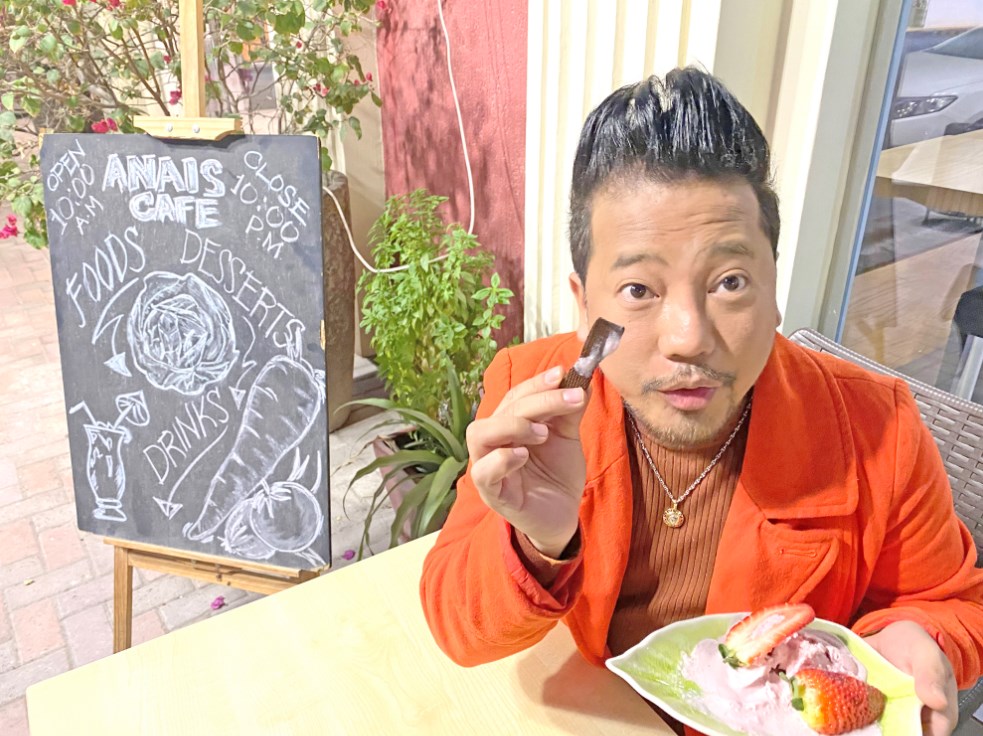
Diners may soon be tucking into their favourite dishes and saving the planet from plastic waste by eating their cutlery afterwards, if an environmental enthusiast gets his way.
Campaigning Kai Miethig hopes to entice restaurants and cafes to offer customers a green crunchy alternative now available in the kingdom.
“Our society needs to change its habits from using plastic to natural products, which will have a positive impact on our body and nature,” the 49-year-old German expatriate architect said. “The amount of plastic items used appears to have increased since the start of the Covid-19 pandemic.”
Spoontainable, which are made in his home country, are tiny edible spoons made using leftover raw remains of oats and cacao shells. Cacao is a superfood containing more antioxidants than blueberries and is a good source of iron, calcium, and magnesium. Oats feature fibre, vitamins and minerals that are also good for you.
“The spoons are made using the remainder of those raw materials,” said Kai, who has been living in the kingdom for more than 15 years. “So instead of being thrown away, they are processed into fibres and then turned into spoons which are quite sustainable. What is even more interesting is that the spoons are healthy because shells usually are more nutritious than the actual beans or flakes.
“They also remain crispy and even if you don’t like to eat them, then you can feed it to birds, fish or chickens!”
Kai, who was appointed as the 2021 Island Innovation ambassador in Bahrain, came across the edible cutlery while conducting his regular research on finding eco-friendly alternatives to preventing people from using plastic.
“Plastic items are toxic so any single-use plastic item must be replaced by more sustainable alternatives, and they are now readily available,” said Kai, who works with the owner of a start-up trading company to provide eco-friendly products such as the spoons, compostable plates as well as coffee and tea cups with lids to the kingdom.
In 2019, a new regulation on the use of single-use plastic bags in Bahrain came into effect with companies including hypermarkets adhering to the rule.
The first phase focused on single-use plastic bags as well as banning the import of non-biodegradable plastic bags. This followed the Ministerial Order Number 11 for the year 2019. The country’s second phase involved the ban of importing and producing disposable plastic table mats and covers.
Piles of plastic, including bottles, are still being found on the beaches of Bahrain, which Kai continues to combat through community beach clean-ups.
He added: “On average, humans eat 5gm of micro-plastic weekly. If people are really concerned about their health, it should start with using heathier products. Prevention is the key.”
Kai is currently working on introducing the edible spoons into the market and would be more than happy to provide samples to coffee shops that want to be sustainable.
“Talks are ongoing with several hotels and coffee shops already,” he added. “You can replace the cookies often served with tea or coffee with these spoons as a tasty alternative.
“The spoons and other products are a small step in the right direction and aside from the nutritious value, there is also the fun factor of using them. So don’t waste it, taste it!”
For details, follow
@kaimiethig on Instagram.

