

_page-0001_20260903101241.jpg)




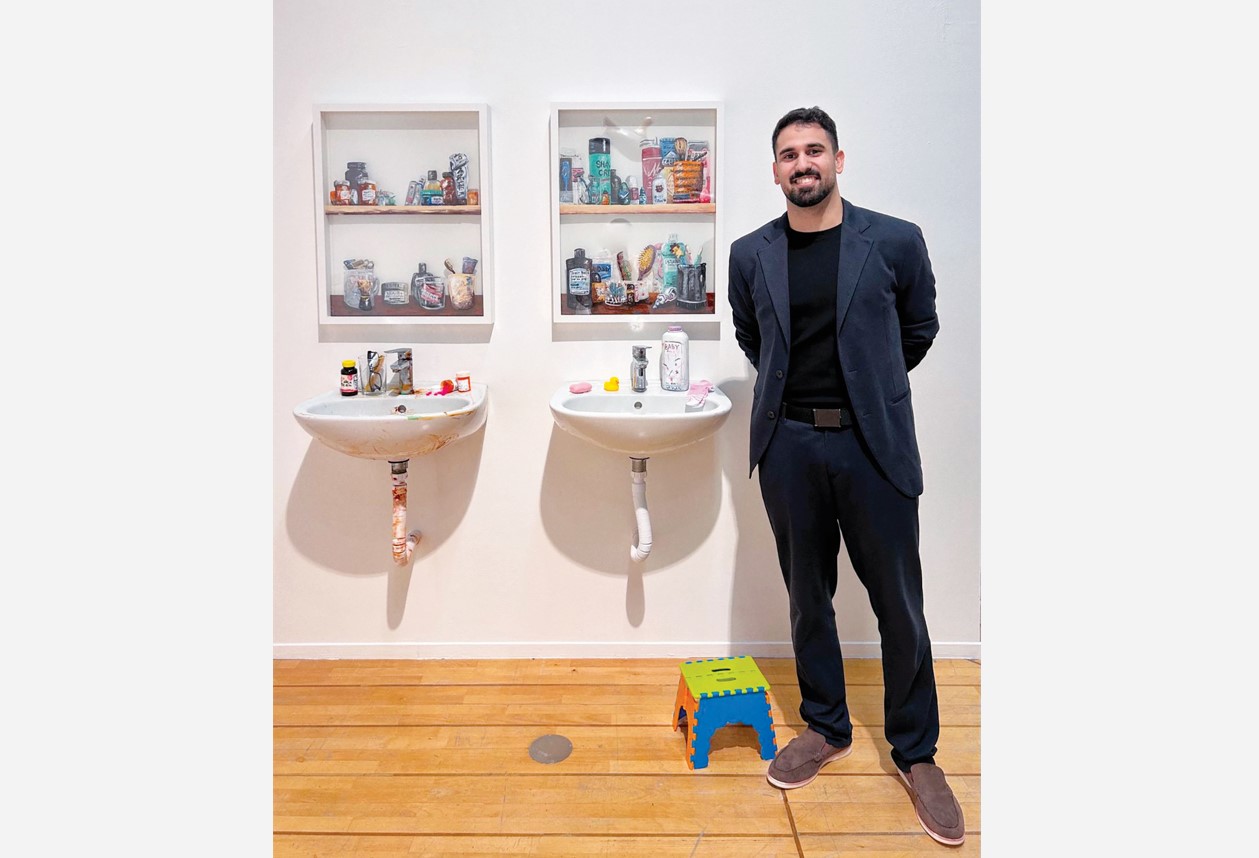
Bahraini artist Khalid AlAbbas’s award-winning installation Telling Time takes viewers on a journey through a lifetime, as seen by a mundane daily relic – the toilet wash basin.
Now on show at the National Museum as part of the Bahrain
Annual Fine Arts Exhibition, Khalid’s piece won the Al Riwaq Prize, marking
both an arrival and a new beginning for the 25-year-old artist.
“As an artist, you start by seeking art for the sake of
art,” he told GulfWeekly.
“But after a long time of dedication, receiving recognition
from professionals in the field truly means a lot.”
His winning installation unfolds across two parallel
domestic scenes, each centred on a hand wash basin and medicine cabinet.
On the surface, the objects are familiar, but a closer look
reveals an entire lifetime.
The first installation captures the energy of a young family
– makeup, grooming products and baby items all gathered around a clean basin,
forming a vibrant tableau of shared space and new beginnings.
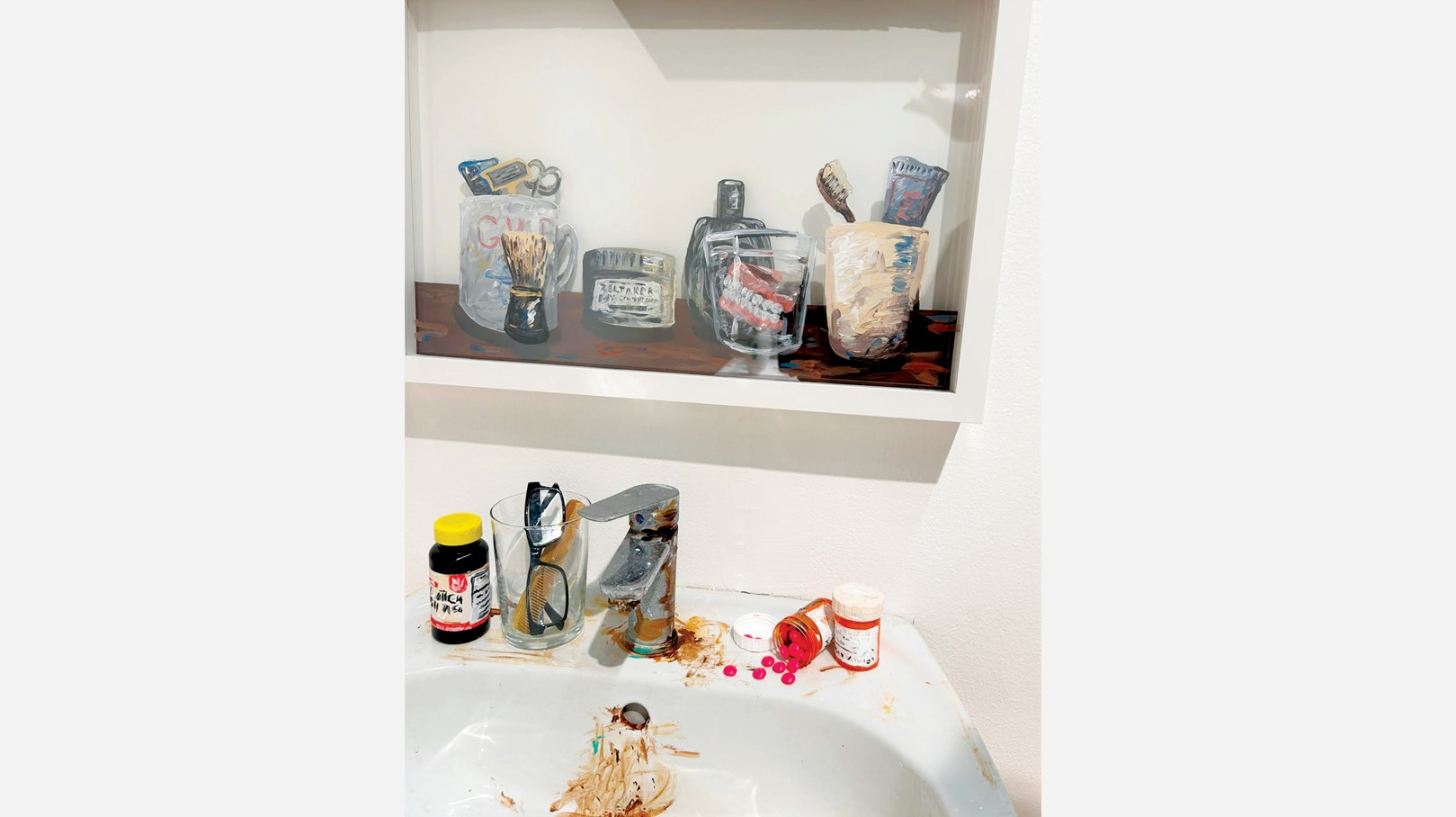
The second scene tells a more solitary and rusted story
where the basin is worn and visibly aged. The cabinet is crowded with medicine,
accompanied by items such as dentures.
This is later life, stripped back to essentials, where care
becomes inward and the domestic space belongs to one.
“I’ve always appreciated the items I own,” Khalid explained.
“I’ve been privileged to see things my grandmother and
grandfather used, like old cameras and photographs.
“Those objects carry time within them. They hold stories.”
That sense of inheritance became more personal in 2025, when
he got engaged.
“What amazed me was how the items of two people come
together, get shared, and create something new with vibrant colours,” he added.
“That directly inspired the first part of the installation.
“The objects show how a young family cares for themselves
and their children.”
The second installation, by contrast, leans heavily into
metaphor.
Medicine and dentures stand in for ageing, while the absence
of family items underscores isolation.
“The cabinet belongs to a single old man,” he noted.
“It reflects a later stage of life, when you are alone.”
Though themes of time and decay have long fascinated
artists, Khalid wanted to approach them from a fresh angle.
The decay of time has always been a muse for him and his
attachment to objects revealed the idea naturally.
Technically, Telling Time bridges painting and installation.
Two layers of glass are framed together with a narrow gap
between them, each painted separately in acrylic to form a three-dimensional
medicine cabinet.
The technique allows viewers to see both brushstrokes and
depth, merging realism with painted texture.
“I am a painter before anything else, and this is my first
installation,” he explained.
“So I wanted the painter side to be present. The layered
glass gives a 3D effect while still showing the hand of the artist.”
The basins themselves are also treated as painted surfaces,
with carefully arranged daily-use items rendered to feel as though they have
stepped out of a canvas.
The first remains clean and new, the second deliberately
aged, visually mapping the passage of time.
“When I look at items my grandparents used to own, I feel
fulfilled, like I can tell a story that belongs to me, but not really,” the
artist, who works in the reinsurance industry, added.
“Not many people have that privilege. I want to preserve the
same thing for my children, grandchildren, and their children too.
“Time, to me, is a story I want to freeze into a frame for
those who come after us.
“I want people to pause.
“To look at what they have around them, and who they have around them. To appreciate the time they are in, and feel thankful for what they have.”
