





NEW research has revealed that vital, straightforward equipment used to save the lives of heart attack victims is not readily available in Bahrain, although it is commonplace across the modern world.
In fact, less than a quarter of places surveyed and considered most likely to make the automated external defibrillators (AED) available when needed actually had them ready to use.
The portable electronic life-saver is used outside hospitals to deliver an electric shock to give the heart a chance to spontaneously re-establish an effective rhythm on its own.
It is considered an essential part of a first aid kit in most countries, including some Gulf nations. Internationally, they have been readily available in malls, schools, office buildings, gyms, airports, health centres and embassies for years – in fact, in most areas where large numbers of people gather.
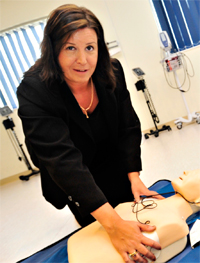
Orla Merrigan, a lecturer in nursing at the Royal College of Surgeons in Ireland (RCSI) at Busaiteen, conducted the local study which revealed that only 20 out of 84 places she surveyed in Bahrain possessed an AED.
In many instances people were not even aware that such a portable and easy-to-use piece of equipment was available on the market.
“If someone has a cardiac arrest and collapses and they do not get the necessary attention within four to six minutes the chances of survival are less than five per cent,” said Orla, 37, who wants to raise awareness of the machine’s life-saving credentials and to help improve safety standards across the kingdom.
If the heart attack victim receives cardiopulmonary resuscitation (CPR), an emergency procedure consisting of external cardiac massage and artificial respiration, and is then defibrillated, their chance of survival increases significantly.
CPR and AED are the first treatments necessary for a person who has collapsed, has no pulse and has stopped breathing because such action can restore circulation of the blood and prevent death or brain damage due to a lack of oxygen.
“If you recieve CPR and defibrillation early on your chance of survival goes up to 90 per cent,” said Orla.


