





Johan Vega knows the Havana Golf Club well, writes Rory Carroll. Too well. He has played every bunker, green and fairway thousands of times and the course has become monotonous. “It’s like being on a carousel, round and round, round and round. I can do it with my eyes shut.”
To demonstrate, Vega drops a ball to his feet, closes his eyes and with an eight-iron makes a neat chip towards the green.
Golfers like to tackle different courses but the club is Havana’s sole golf course and Vega, 37, is Havana’s only golf instructor. He has worked here for 15 years with an increasing sense of ‘groundhog day’. “I could do with a change,” he sighs.
He may get it. Half a century ago there were plenty of other courses but Cuba’s revolution annexed them on the grounds that they were capitalist, leaving the nine-hole Havana Golf Club and an 18-hole course in Varadero.
Now, however, the pendulum may be about to swing back. Fidel has relinquished power and there is talk of new courses opening across the island, including several in the capital.
The Cuban Tourism Minister, Manuel Marrero, has said up to 10 courses may be built. The government is worried that the tourism industry, a crucial foreign exchange earner, is slumping. High prices and mediocre facilities are blamed for a 4.3 per cent drop in visitor numbers. A particular concern is that few Britons, the most common visitor after Canadians, return for a second visit.
Enter golf. The sport has helped the nearby Dominican Republic boost tourist numbers and President Raul Castro, who has succeeded his ailing older brother, hopes it can do the same for the impoverished communist island. “They know they need to get more money into here and they know golf may be able to do that,” said one western diplomat.
Investors are being encouraged to build courses while the government plans a huge upgrade to tourism infrastructure. A golf taskforce is said to have been formed.
The New York Times reported earlier this year that preliminary approval had been granted for four large luxury golf resorts on the island, the first in an expected wave of more than a dozen that the government anticipates will lure free-spending tourists to a nation hungry for cash.
The four initial projects total more than $1.5 billion, with the government’s cut of the profits about half. Plans for the developments include residences that foreigners will be permitted to buy – a rare opportunity from a government that all but banned private property investments in its push for social equality.
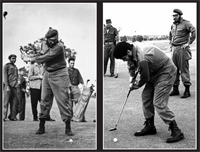
Mr Castro and his comrade-in-arms Che Guevara, who worked as a caddie in his youth in Argentina, were photographed in fatigues hitting the links decades ago, in what some have interpreted as an effort to mock either the sport or the golf-loving president at the time of the revolution, Dwight D Eisenhower – or both.
Mr Marrero told a conference in Europe that the government anticipates going forward with joint ventures to build 16 golf resorts in the near future.
Golf arrived in Cuba in the 1920s and was associated with the Americanised elite. When the revolution triumphed in 1959, Havana had three courses. Fidel, though not keen on the game, played Guevara in 1962 as a publicity stunt.
Jose Lorenzo Fuentes, a reporter who covered the event, said the two revolutionaries were hyper-competitive. Fidel, a bad loser, resented being beaten even though his deputy had more experience.
The course, Colinas de Villareal, was ripped up and converted into a barracks and another course, the Havana Biltmore Golf Club, was turned into an arts school.
The Havana Golf Club’s grandeur has faded. These days the tee-flags are missing and staff members spend idle moments knocking fruit from the trees. For a fee of under BD6 – the average monthly state wage – means players tend to be diplomats and Cubans who work for foreign firms.
“It can get pretty quiet here,” said Vega, the instructor, who grew up opposite the course and has worked there six days a week for 15 years. The loneliness of the long distance runner is nothing compared to being one-of-a-kind in Havana. “It can feel pretty solitary.”


