

_page-0001_20260903101241.jpg)




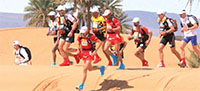
Cancer survivor Kenny Dalglish stepped out in support of a charity group near and dear to his heart by running one of the most gruelling ultra-marathons in the world.
Dalglish, 31, an officer in the UK Royal Navy, from Muharraq, is an adrenaline junkie who gets a thrill out of activities such as mountaineering, skiing, mountain marathons and triathlons. He ran the London Marathon in 2003 and in the summer of 2010, he successfully completed the UK Ironman race, which includes a 2.4-mile swim, a 112-mile cycle and a marathon.
The man is a force to be reckoned with, taking on obstacle courses and extreme challenges with gusto. However, in March 2011, Dalglish faced one of the most difficult obstacles in his life that nothing could have prepared him for – he was diagnosed with Stage 1 testicular cancer.
Dalglish said: “For my wife Laura and I, our first thoughts were for the baby that we had only recently found out we were going to have.”
With Laura by his side, Dalglish went under the knife and had an orchidectomy, which is a surgical procedure to remove a testicle and the full spermatic cord.
The procedure is generally performed by a urologist, typically if testicular cancer is suspected. Often it is performed as same-day surgery, with the patient returning home within hours of the procedure.
“After I had the cancer removed I did a single course of chemotherapy. I was lucky to have caught it early and in the end I was only off work for 10 weeks, although, it did take me much longer than that to return to my full health and fitness levels,” Dalglish said.
“I got through it thanks to the most amazing support and bravery from Laura. We had only been married for 18 months and this experience really cemented our marriage and relationship.
“I am incredibly lucky that she was there. We also knew that we had wonderful news to share with people, although not at that time, because if something had gone wrong with the pregnancy it would have been too awful.”
In the UK, approximately 2,000 men are diagnosed each year and the risk of testicular cancer is roughly 1 in 250. It is the most common cancer in males aged between 20 and 39 and is rarely seen before the age of 15.
Dalglish said: “It’s a sad fact that guys don’t generally talk about this stuff, it’s a taboo and they therefore don’t realise how serious it can be. Think of what happened to Lance Armstrong when he ignored the signs; he ended up with cancer on his brain.
“Guys, if ever you find something unusual, see your doctor straight away. Don’t wait. If you find testicular cancer early it’s almost 100 per cent curable. Ladies, don’t allow your men to be shy.”
After surviving the ordeal, Dalglish decided to raise awareness for male cancer by putting his stamina to the test and running The Marathon des Sables in April 2013, which was ranked by the Discovery Channel as the toughest footrace on earth.
He also aimed to raise £10,000 (around BD5,700) for The Orchid Cancer Charity by running the 150-mile marathon in the Moroccan Sahara desert.
The seven-day-marathon known as MdS is a gruelling multi-stage adventure that was started in 1986 by Frenchman Patrick Bauer.
Dalglish had met Bauer in London in October at the MdS expo where he saw his video and the 35kg pack that he carried, which included all of the water for his epic solo mission.
The rules of the ultra-marathon require individuals or teams to be self-sufficient and to carry everything they need to survive on their backs. Participants will be given a place in a tent to sleep at night, but any other equipment and food must be carried.
Dalglish began his training in the UK over the winter to prepare himself for the distance but it was all in snow, a far cry from the hot, sandy terrain of the desert.
Dalglish began to write about his experiences in January, sharing his thoughts about cancer and his rough desert journey on www.saharakenny.com.
In February, he moved to Bahrain and used the experience to aclimatise himself. He ran around Muharraq and in the south of Bahrain in the desert beyond Durrat Al Bahrain, covering up to 30 miles at a time.
He knew he would be facing maximum temperatures of 54 degrees C during the MdS run, and the longest day was 50 miles, which takes 18.5 hours nonstop.
Despite the blisters and unrelenting heat, to Dalglish, the MdS was the most incredible adventure, a testament to the power of the human body and spirit.
“I have seen astounding views in the company of amazing people. I have been chastened by my own limitations, but pushed myself far beyond where I thought I would give up. I have found where the true physiological limit lies, yet got up again and finished the race,” Dalglish said.
“When I signed up for the MdS I had not yet recovered from the symptoms of treatment for cancer, let alone the psychological effects. It changed my perspective on life. The MdS has given me a target for my energies, a reason to talk about my experiences and the opportunity to harness the incredible generosity of my family, friends, colleagues and some complete strangers in raising around BD8,000 for charity.
“Now I think that I can draw a line under cancer. I will need to talk about it less, though I remain committed to spreading the word that it needn’t always be the end of something but can be the beginning.”
Dalglish will be returning to the UK soon and he is looking forward to staying fit as well as spending a lot of time outdoors running with his dog. He has also planned to enter some mountain marathons over autumn.
During his time in Bahrain he gave a lecture to around 45 people as part of the regular monthly series of ‘Living Room Dialogues’ at St Christopher’s Cathedral in Manama. He not only shared the incredible experience of the race, but also how it felt to be diagnosed with cancer and the effect it had on him.
Dalglish said: “A close call like this really makes me appreciate my life and the most important things in it, my wife Laura and my beautiful daughter Jemima.”
Those who wish to continue supporting his charity can still make donations through his website.


