

_page-0001_20260903101241.jpg)




For those wishing football would find a break in the annual calendar there does promise to be some mouthwatering fixtures to whet the appetite, despite these European Championships having been extended to 24 teams for the first time in history.
Given there are only 54 nations that can qualify this does appear to be a little excessive to anyone outside of the likes of Wales and Iceland who have qualified for the first time! Indeed, Iceland, one of five nations to make their debut, are the smallest nation to ever appear in the finals with a population marginally above 300,000. Stretching until the final on July 10 there is non-stop football for almost the first two weeks so for anyone not wanting to sit glued to the TV here is Abu’s Guide to the sides and fixtures to watch out for.
In a season when Leicester City has surprised football followers from around the world pundits are increasingly wary about making predictions, particularly in a competition that has a history of springing surprises. Think back to the 1992 championships that were won by Denmark who were called into the tournament late as a replacement due to the civil war in Yugoslavia and the unheralded Greeks of 2004 who were ranked 34th in the world at the time.
The 2016 equivalent also features a number of teams that are genuine contenders, although each has experienced its own difficulties in qualifying. The European Championship’s top-ranked team under the FIFA rating system is Belgium (2nd behind Argentina), who will be joined by the defending champions, Spain, and World Champions Germany. There is an argument that it is harder for host nations to win at home due to the increased pressure although this is not a problem that has affected the French in the past as they have been victorious on the two previous occasions they have staged major competitions in 1984 and 1998.
French football is never far from the headlines due to infighting and scandal and this year is no different following the omission of Karim Benzema, yet the squad appears to have a collective sense of optimism thanks to some global superstars combining with bright emerging talent. In midfield Pogba, Matuidi and Kante ooze power and athleticism while Griezmann and Martial offer pace and a goal threat from wider positions.
This leaves France’s manager, 1998 World-Cup winning skipper, Didi er Deschamps, the option of bringing on Payet, Diarra and Kingsley Coman (you will hear more about him in the future) off the bench. Up front, without Benzema, the main burden rests on the much-maligned shoulders of Olivier Giroud although Deschamps has sprung a surprise by selecting Andre-Pierre Gignac who has lifted his first national championship in Mexico.
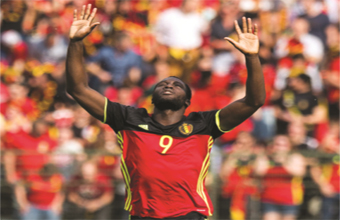
The French defence is considered to be their weakness due to a combination of age and poor form, although they should receive plenty of protection from midfield. It is time for Belgium’s golden generation to finally deliver? Boasting some of the best individual talent on display the challenge for coach Marc Wilmots is to encourage De Bruyne, Hazard, Lukaku and Fellaini to play well together. Despite an embarrassment of riches Wilmots’ challenge has been to gel the French and Flemish-speakers that have previously been known to sit separately at opposite ends of the same restaurant.
However, following the devastating terrorist attacks that left the nation reeling, in common with the French, the Red Devil cliques appear to have united which could mean that Belgium offers the threat that their ranking suggests they should be capable of. While they do not possess the strength or variety of the hosts in midfield, a Premier League back five and greater strength at the opposite end of the field means that they are fancied to succeed. The World Cup winners, Germany, enter this tournament with several of the minnows eyeing them as a potential scalp.
While they retained many of their successful squad, the loss of Lahm and Klose combined with the injuries sustained by Schweinsteiger means that Die Mannschaft have struggled to regain their balance. While Germany has reached the semi-final stage at each of the last five tournaments, Joachim Low’s men have lost six times since then, including twice in qualifying to Poland and Ireland, the first of whom they will meet again in the group stage.
At this time of year two years ago Spain had won three consecutive tournaments while also lifting two European U-21 titles to reflect a strong production-line of talent. It all started to unravel in Brazil with a 5-1 defeat to the Dutch (who are missing in France) leading to the retirement of several key players. Ever since Vicente del Bosque, one of only two managers to have won this title alongside the World Cup, appears to have struggled to settle on his best side.
The exception to this is his defence which, with Pique and Ramos shielded by Busquets in midfield, dominated qualifying and produced the fewest goals conceded, admittedly from a weak group. La Roja are another team that has a plethora of talent in midfield (Iniesta, Fabregas, Pedro, Silva to name a few) although no natural centre forward who can both score and complement their slow build-up play.
Morata, whilst being one of the most coveted forwards on the transfer market merry-goround this summer, does not appear to be a natural fit. France will host a number of derbies during the group stages with England taking on Wales, Austria playing Hungary while Poland will hope to repeat their qualifying upset over Germany. June 11 is another date to put in the diary as Switzerland’s Granit Xhaka will face his brother, Taulant, who will don the colours of Albania.
There are three British teams plus Ireland represented meaning that Scottish supporters will be cheering on any team playing against England. For the neutral seeking excitement, then look for teams with an eye for goal and a weakness or two in defence. Poland boast Lewandowski and Milik while Switzerland, despite having scored just five times in nine previous outings, will hope that the ‘Alpine Messi’ Xherdan Shaqiri, can link with the emerging talent that is Breel Embolo. Austria and England will also fit into this category.
Ronaldo (Portugal) and Ibrahimovic (Sweden) will no doubt hog the headlines during the group stages in the race for the Golden Boot yet they will have to score heavily early on with their sides unlikely to progress too far. Of the sides likely to make it to the later stages Lukaku (Belgium), Muller (Germany) and Griezmann (France) look best equipped to claim the individual accolade. Abu’s prediction to win the tournament: France – strength in depth combined with pace and talent.


