

_page-0001_20260903101241.jpg)




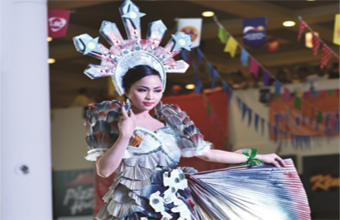
Filipino fashion designers residing in Bahrain took on a mission to showcase their skills, save the planet and mark their home country’s Independence Day.
Eight skilled contestants created a series of stunning outfits constructed from recycled materials to help bring awareness of the 3Rs - reduce, reuse and recycle.
Although Sunday marked the 118th anniversary of The Philippine Declaration of Independence from Spain, the Filipino community on the island staged a pre-Ramadan day of celebration at Adhari Park, as featured in last week’s issue.
Top fashionistas, including GulfWeekly’s fashion editor Camille Jones, were also asked to judge the creativity, design, resourcefulness, relevance and audience reaction to the entered creations with a first place prize of BD300 of offer, with BD200 and BD100 for second and third place respectively.
The Filipino-inspired gowns submitted needed to also focus on a traditional style dress featuring modest sleeves and a long skirt. Pre-judging was carried out back-stage and the final points were given for the audience impact during a runway presentation.
Creativity was the order of the day and the designers used everything from potato sacks to broken CDs to fit the theme. Cultural music was played as the models swayed gracefully on stage looking royal in their recyclables.
Sartorially speaking, the trash tresses were stitched and fitted miraculously and appeared to exceed the audience’s expectations. Camille was joined on the judges panel by blogger Georgina ‘Blonde in Bahrain’ Jennsen and Directions PR’s head of operations Puja Tiwari and Fernanda Langhammer, Women This Month’s fashion editor.
The first contestant’s entry designed by Joel Dimapills was a ball gown made of russet sacks, decorated with plastic flowers made from coloured cups, painted bottle caps and cardboard rolls. Model, Charlene Mae Garcia, suffered a slight wardrobe malfunction as she tripped up on the bottom of the dress as it began to fall apart.
She quickly recovered her walk by picking up the gown and flashed a beautiful white smile before safely making it to the end of the runway. Contestant number two was welcomed by loud screaming from supporters holding up, spray painted signs in support of designer Roger Padong’s resourceful use of materials.
He cleverly used the tabs off soda cans for the skirt decoration. Jhune Atelier’s creation came next with the use of simple techniques featuring plastic sleeves and cut glass with a full gown made from russet sacks. Plastic spoons and paper plates made up most of the design elements for Louie Capistrano’s entry.
His flower creations made from spoons proved spectacular, and it fitted the traditional theme well with the addition of the carousel the model held. Number five, Christian Flores, used rice bags with pinks, yellows and blues which looked amazing on model, Aprrile Balance. The skirt sported a large yellow sun fashioned with rice bags to symbolise the sun on the Filipino flag.
Joel Fashion and Style’s traditional outfit followed in mustard yellow and there was clever use of black plastic bags tailored into a mermaid skirt, fashioned with yellow plastic cups flowers. Glimmering CDs, pieces of glass, black wire, corrugated paper and black-coloured egg cartons made up Rommel Pascual’s creation.
It was well constructed and simply shimmered with iridescent brilliance. And, last, but not least, contestant number eight, Aristotle Tejano, walked away with the grand prize in style after taking to the stage and attracting a huge reaction from the crowd.
His use of pleated materials was magical - tinted in subtle pinks, reds, blues and greys. The head dress featured flashing lights and a pointed crown. Clutching his big money winnings, Aristotle, who has lived in Bahrain since 1995 was both stand and delighted by his success.
He specialises in designing traditional clothes and party-wear and said: “I was really shocked as I had considered backing out at the last minute because I had so much work on during the run up to Ramadan.
“I stayed up for three whole nights to finish it on time. The dress was made from paper electro pleats that are used to help pleat less-structured material for tailoring.” The design came to him in a flash after he spotted some of material abandoned outside a local shop.
“I went inside and asked if they had anymore because I had a great idea to use the pleat templates for the dress,” Aristotle added. The front of the dress aptly represented a map of the Philippines and the headdress, the star of the national flag.
“The three blinking lights symbolise our three major regions - Luzon, Visayas and Mindanao,” he said.
The future of Filipino designing looks to be sustainable in clever Aristotle’s hands! ‘Every art and every inquiry, and similarly every action and choice, is thought to aim at some good; and for this reason the good has rightly been declared to be that at which all things aim’.


