




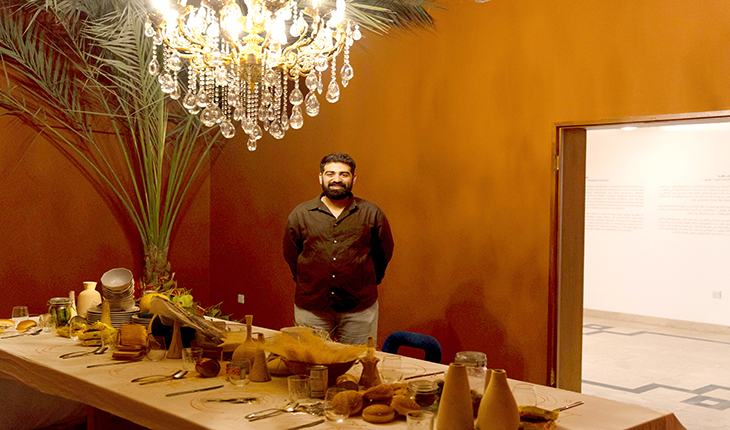
Bahraini culinary storyteller Yusuf Qamber has been thinking about how food can communicate, when it is no longer meant to be consumed, in his latest art installation, now on display at Al Riwaq Art Space.
In Apocalypse Buffet, which can be seen at the Residual Spaces exhibition until July 23, the chef and artist steps beyond his comfort zone of preparing food for people into the territory of food as a reflection of waste, preservation and collapse.
“The project was largely inspired by the uncertainty and anxiety that followed the Iranian attack,” the 32-year-old Riffa resident, originally from Muharraq, told GulfWeekly.
“Like many people, I found myself thinking about vulnerability, preparedness, and the fragility of the systems we depend on every day.
“The initial concept focused on abundance during moments of crisis and how people respond when they feel resources may become scarce.
“As the work evolved, it became less about the event itself and more about humanity’s relationship with consumption, preservation, and waste.
“The final piece became a reflection on what remains after fear, excess, and survival instincts shape our behaviour.”
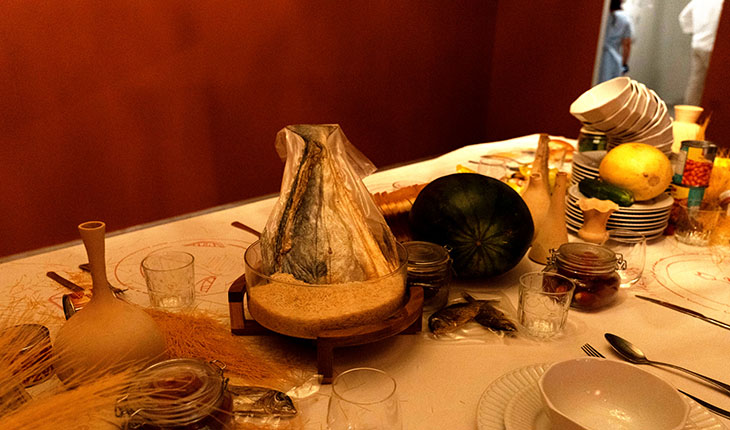
In Al Riwaq’s Bank House 2, Apocalypse Buffet centres on a dining table, set with hallmarks of feasts in Bahrain and the Khaleej – plenty of bread, fish, vermicelli and fruit, but none of it is meant to be eaten.
It invites viewers to instead reflect on the amount of food that is wasted at every special occasion and feast.
“Apocalypse Buffet explores abundance at the edge of collapse,” Yusuf explained.
“The work presents preserved and vacuum-sealed food as artefacts from a civilisation obsessed with consumption, excess, and convenience.
“By removing food from its natural cycle of preparation, sharing, and eating, the piece asks viewers to reflect on waste, preservation, and what future generations might discover about us through the traces we leave behind.”
According to a GDN news story earlier this year, food waste in Bahrain has risen by 23 per cent since 2022, rising from 400 tonnes per day to approximately 493t and soaring to more than 600t during every day of Ramadan.
The UN Environment Programme (UNEP) Food Waste Index Report 2024 revealed that nearly a fifth of food produced each year is squandered before it can be consumed, and the total cost of food loss and waste for the global economy is estimated at roughly $1 trillion (BD377bn).
While earlier generations in Bahrain relied heavily on seasonal ingredients, local agriculture, fishing, and preservation methods shaped by necessity, today, globalisation has made ingredients from around the world available year-round.
While this expanded culinary possibilities, it also distanced many people from the realities of production, seasonality, and scarcity.
“What surprised me during my research was how much waste is connected not to hunger or necessity, but to cultural ideas of generosity and abundance,” Yusuf added.
“In many cases, excess food becomes a symbol of hospitality and social status.
“The research made me think about the gap between our appreciation for food and our treatment of it, and how easily something valuable can become disposable.”
Yusuf joined the Al Riwaq residency to challenge the boundaries of his practice.