While modern Arabian fragrances have enjoyed mass appeal since the last few decades, a love for scents of the East began more than 3,000 years ago.
Along with spices, exotic ingredients like oud, myrrh and frankincense were transported to the world via the Gulf trade route.
Perfumes have been an integral part of Arab culture for millennia, having both social and religious significance. Commonly worn before Friday prayers at the mosque and during religious festivals, they reflect virtues like purity and cleanliness.
Fragrances also symbolise hospitality and joy and burning bakhoor at home especially while welcoming guests is a widely practiced Middle Eastern tradition.
A major factor that sets Arabian alchemy apart from the international industry is its use of rich natural ingredients, including musk, amber, Taif rose, saffron and cardamom – most European fragrances heavily rely on synthetic elements.
Overtime, modern Arab perfumers have explored the influence of newer ingredients, blending them with traditional accords, opening the enchanting world of Middle Eastern scents to connoisseurs worldwide.
Among them is Studio Beyn launched last year by Bahrain-based sibling trio Lulu, Liela and Khalid Alsugair. They unveiled their winter collection in October 2025. Their second ensemble came this year and is more summer leaning.
Their scents feature diverse influences, including delicious cardamom-laced Arabic kahwa (coffee), decadent traditional halwa, the fresh green gardens of Budaiya, sweet dibs or date syrup, exotic palm blossom and more.
“Studio Beyn is all about being ‘in between’ (beyn in Arabic means ‘in between’) – encompassing different worlds,” co-founder Lulu, who has both Saudi and Filipino roots, told GulfWeekly.
“We have never felt fully Saudi or fully Filipino and we’ve been lucky enough to grow up in Bahrain where it’s so welcoming and diverse. We pursued university in the UK. So, in terms of culture, we’re always in between,” she added.
Celebrating their Saudi heritage, the trio created a scent nodding to the Ineza and Dahna tribes. Two Airs on the other hand is a composition that brings together rich ouds and resins with lush florals such as ylang-ylang – a thriving bloom in the Philippines.
The St Christopher’s School alumna, who handles the logistics for the brand, recounted their childhood trips to the suq to buy perfumes as gifts for relatives back in Saudi, noting that those adventures sparked their passion for perfumery.
“We would always give our relatives different perfumes that we personally mixed and it became our signature gift in the family. Even the shopkeepers would be impressed by the combinations and the reactions we got partially fuelled us to do something within perfumery,” she said.
Lulu revealed that each of their creations is narrative driven. Presently, they have 13 perfumes, each telling a personal story. The products are manufactured in factories outside the kingdom. However, the accords and notes are developed in Bahrain. While the perfumes are all oud based, they blend other influences, creating unique profiles.
“Our fragrances are inspired by stories, landscapes, and cultural exchange, ranging from unconventional florals to resinous, woody, and verdant compositions – each interpreted through the Studio Beyn perspective and born between worlds.
The Al Markh resident highlighted that each of their scents draw men and women across ages, which is how they intend their products to be.
“The Rose that Burnt fragrance is not the stereotypical sweet bloom but a burning rose that has a smoked, charcoal scent that is appealing to men.”
Adding to the local appeal of Studio Beyn is their collaboration with Bahrain’s creative industries.
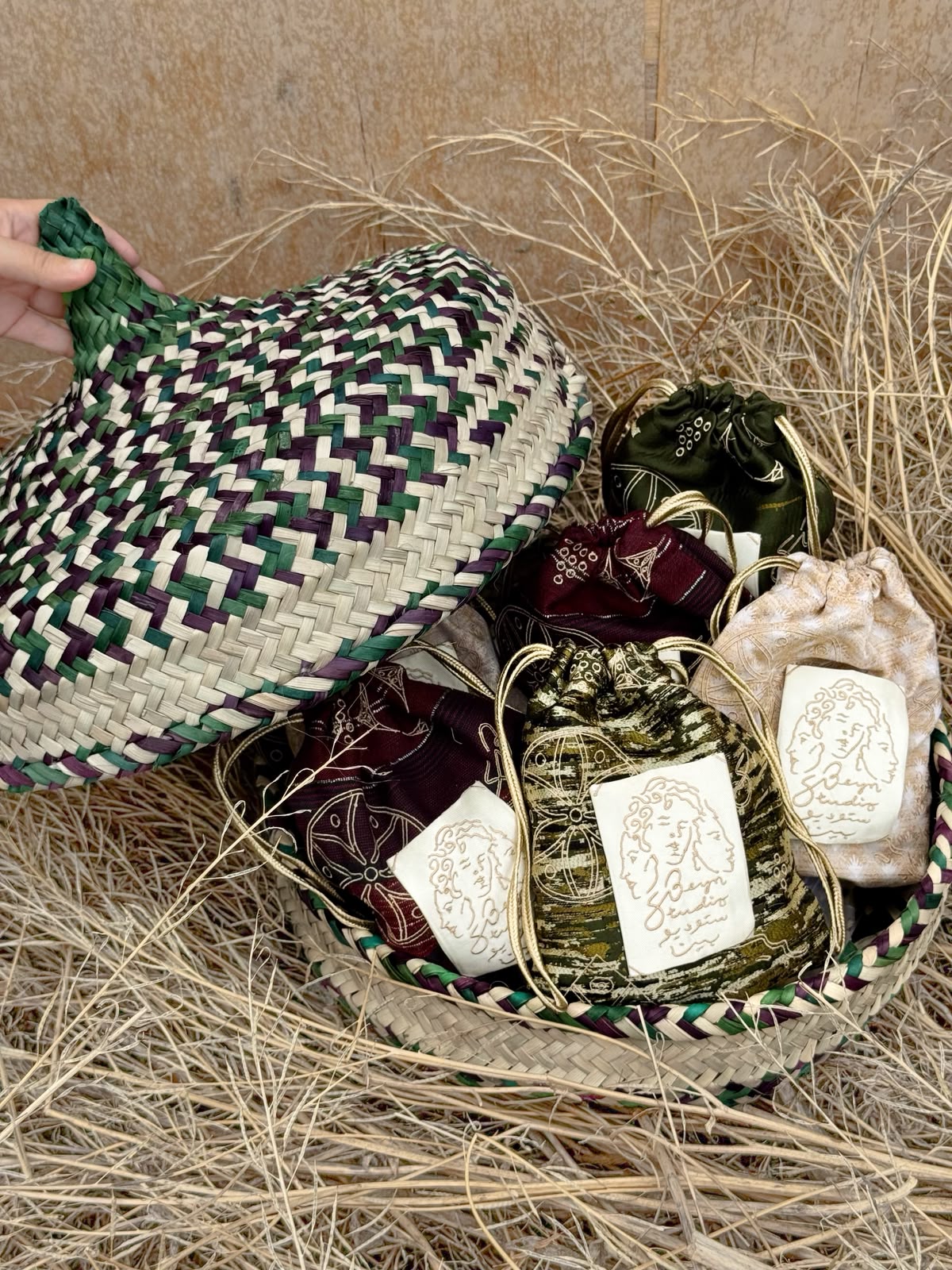
“We package our products in pouches rather than boxes and are collaborating with the Awal Women Society to create Nakhda (traditional embroidery) on them. We want to support local, independent artisans and women-led businesses. I have a gender studies background so, empowering certain demographics is very important to me.
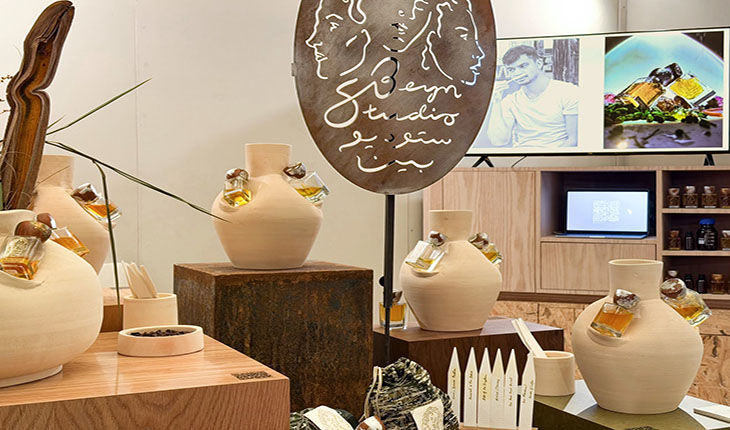
“Even within our spaces, we create things that are symbolically Bahraini like the pots we used to showcase our perfumes during a previous exhibition. They were all crafted in collaboration with skilled craftsmen in A’ali,” she explained.
“Alongside our fragrances, we host intimate weekly ‘salons’ at our home where guests experience our stories through conversation and scent, encouraging a deeper appreciation of Bahrain’s cultural heritage.”
The trio has plans to host more salons in the coming months and launch lectures on ‘the art of perfumery’. Meanwhile, they are encouraging people to reach out via Instagram for more details on their salons. They also hope to participate in Muharraq Nights – the annual culture and arts festival, which will be staged in December.