The Ministry of Education in Bahrain is aiming to introduce Arabic language as a compulsory subject for non-Arab speakers in private schools in a bid to strengthen communication with locals and ‘instill a spirit of citizenship’.
Although the proposal to include Arabic as another language alongside those already taught is at the discussion stage, it is likely to commence in the next academic year.
Currently children learn French from Year 4 to 6 and can then choose between Spanish and French as a compulsory ‘second language’ in British-curriculum schools and Arabic would be an additional subject.
If the plan is implemented it will become mandatory for students to attend Arabic classes from Grade 1, Year 2 until Grade Eight, Year 9, involving children aged from six to 14.
The officials at the ministry hope the move will make pupils more able to communicate with locals and to also learn about the culture they are living in.
The Ministry’s Private Continuous Education Under-Secretary Wedad Al Moosawi said: “The Ministry intends to introduce this programme to enable the Bahraini and expat non-Arabic speakers to acquire the basic skills of the Arabic language, to facilitate communication with local communities in the Kingdom of Bahrain and to strengthen the communication with the Bahraini environment as well as instill a spirit of citizenship among students.”
Ms Al Moosawi continued: “Studying another language includes learning about the culture of the people who speak that language. Therefore, learning Arabic entails educating non-Arab speakers about the culture, habits, lifestyle, beliefs and religion of the locals.
“The project is addressing all non-Arabic speakers in general, regardless of their religion and is directed to students in grades one to eight. However, if the school as well as the students and parents wish to continue, it is up to the school to arrange classes for these pupils beyond this point.
“Teaching a second language is an international educational standard. As far as we know, here at the ministry, this kind of project is being done in the UAE already. We also receive teaching materials at our office by the Arab Bureau of Education for The Gulf States, which aims to co-ordinate and, wherever possible, integrate the educational and scientific efforts of all the GCC-member States.”
Some international schools will face having to take on additional trained staff, find space in timetables and obtain the support resources necessary to provide the additional subject.
St Christopher’s School, the largest British-curriculum school on the island with more than 2,000 students, started providing one-hour of compulsory Arabic classes a week to Junior School non-native speakers 10 years ago.
What began as a pilot study from Years Three to Six in 2002 has now become a successful part of the children’s syllabus, and this year, has been further extended to include infant students in Year One and Two. There are currently eight Arabic teachers in the department and three are dedicated to the non-native programme.
Those who wish to continue Arabic language once they move to Senior School can take an optional ‘before school’ class with trained Arabic teachers so they can further extend their learning.
Head teacher of the Junior School, Wendy Bataineh, said: “We already provide a good non-native programme at the junior school. However, if the Ministry accepts the proposal then we would be looking at having to extend this up to Year Nine pupils, which ultimately means we need to take on a lot more staff and train them.
“It is difficult to find teachers who are experienced at teaching non-native pupils. When we first started our programme 10 years ago it was hard, but it has improved and developed so much over the years.
“It is a great opportunity for the pupils to learn Arabic. The lessons are currently one-hour long and we focus on cultural items whilst putting the emphasis on ‘fun’ through interactive methods. They don’t need to take examinations but there may be informal assessments by the teacher. At the end of Year Six the students receive a certificate and that encourages some of them to continue in Senior School.
“If the ministry do this well, it could be a great thing. It will come with a few implications with staff, timing and resources but if the curriculum is right, it should be a success.
“Right now the non-Arab students love learning Arabic and have so much fun. They go home and teach their parents, read road signs on the way to school and are just able to communicate with the basics.”
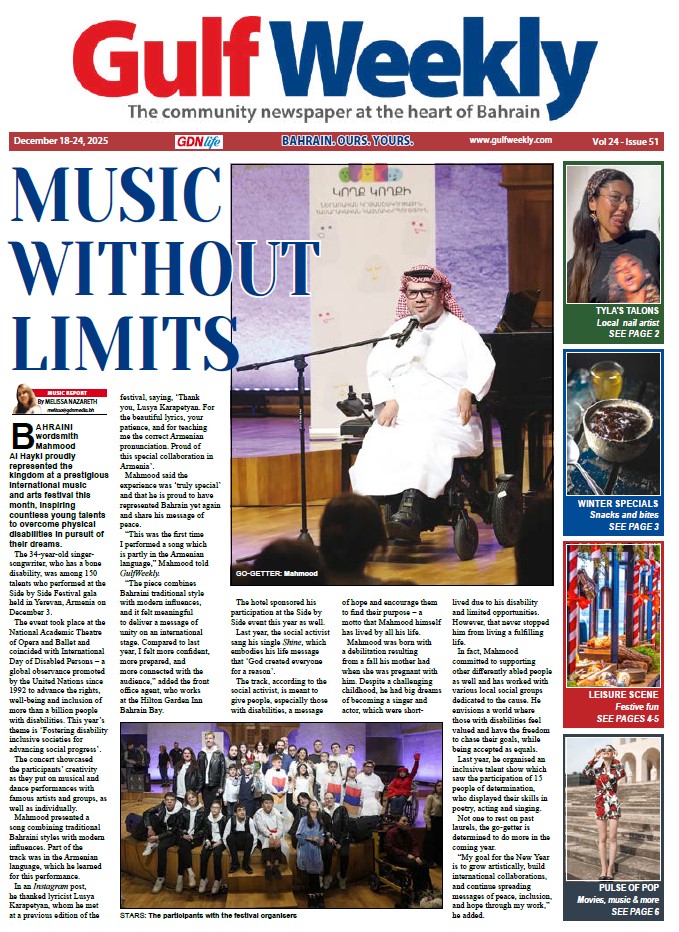
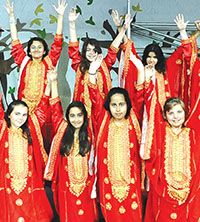
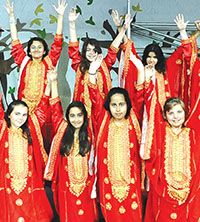
As discussions continue the school is preparing to stage Bahrain Arabic Heritage Day tomorrow with a host of events planned to recognise and celebrate the rich heritage and culture of Bahrain (on Page 1 is a photograph of children taking part in rehearsals). Minister of Culture Shaikha Mai bint Mohammed Al Khalifa will be in attendance.
The Riffa Views International School (RVIS), an American curriculum-based school with 267 pupils, already offers all its students – from three-year-olds in pre-kindergarten to 14-year-olds in Grade Nine – Arabic classes every day.
Around 40 per cent of the school population is non-Arab, mostly coming from the US, Canada and the UK. These pupils are assessed on an on-going process in all language skills, including speaking, listening, reading and writing.
The school is completely equipped with an Arabic department with seven teachers fully trained in various aspects of the subject.Arabic department co-ordinator Mazen Al Sheikh believes that the proposal to start this in all private schools is a ‘brilliant’ idea if planned and implemented properly.
Mr Al Sheikh said: “We believe that all students should take advantage of living in Bahrain, our host country, and learn the language and the culture of its people.
“We live in a world that is becoming smaller and intercultural understanding gained from learning languages is no longer a luxury, but a necessity. We have non-native Arab students at school now who greet me and talk to me in Arabic when they see me shopping or at a restaurant.
“Knowing more than one language opens minds, promotes cultural understanding and increases job opportunities. Our non-Arab students learn about the Arab culture they live in and develop an appreciation to it, interact with locals in Arabic and most importantly know how to bargain when shopping at Manama Souq!”
The United Nations adopted Arabic as one if its six official languages in 1974. It has become the fifth most commonly-spoken native language in the world being the official language of over 20 countries with well over 300 million native speakers of the language.