SOME of the world’s best footballers have been back in training for a week having rested their weary limbs by visiting favourite family holiday destinations such as Disneyland or the young man’s paradise of Ibiza, writes Abu George.
Next week they will be flying out again on commercially-driven pre-season tours.
However, as they start to get match-fit ahead of another long season, 100 of the finest are only just hanging up their boots after a long final week in Brazil.
After 32 days (excluding the preparation), 64 games, 171 goals and 10 red cards the FIFA World Cup 2014 is over.
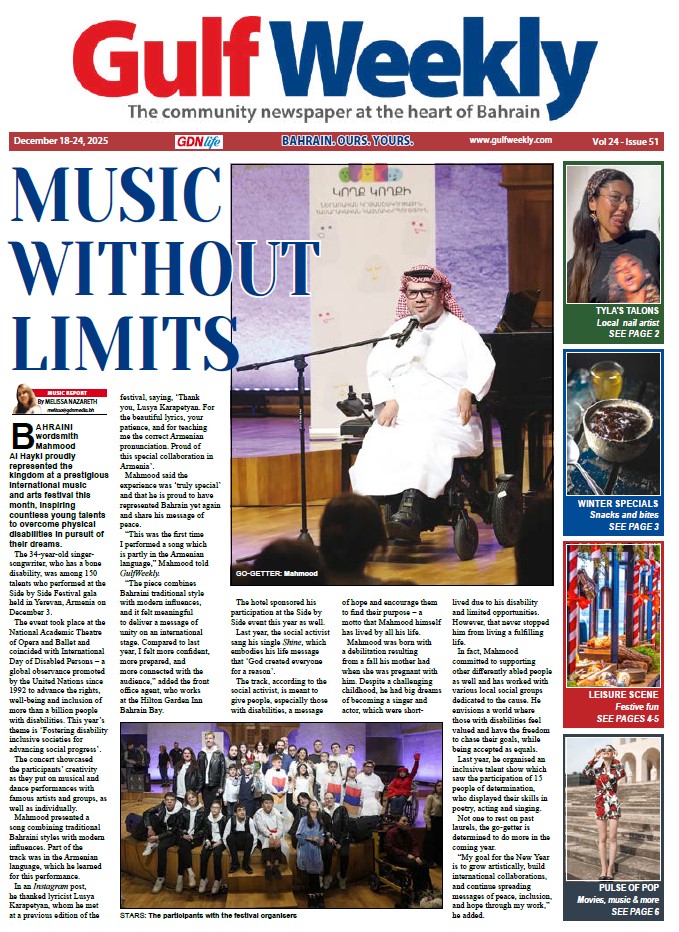
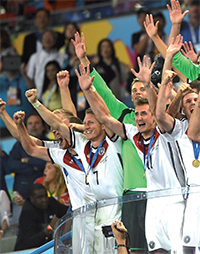
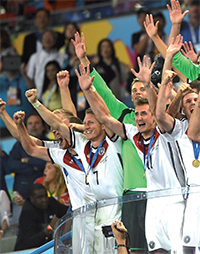
Germany deservedly lifted the trophy, in doing so becoming the first non-South-American team to claim the title on that continent, defying history and an unfavourable draw in terms of both opposition, playing times and conditions.
This was also a just reward for the unfortunate Sami Khadeira who was injured in the warm-up to the match. He became the 10th player in history to claim the World Cup and Champions League in the same season. Bizarrely, had Argentina won then this accolade would have gone to Angel di Maria who was already destined to miss the final.
In mastering all that was thrown at them, Germany ably demonstrated an ability to rotate their squad and show a depth in talent, all the more remarkable given the loss of two of their most creative talents before the tournament began. Preparation also played its part, as they were the only federation to build their own training facilities in Brazil prior to the competition.
Three of the final four teams showed that they deserved to be sampling the drama and passion of the later stages while one was horribly exposed for being one-dimensional and over-reliant on a single player.
The same could be said of Argentina with Lionel Messi having claimed the Golden Ball, presented to arguably the player-of-the-tournament. While he failed to shine when it mattered most and was statistically outshone by a number of players, several of them in the German side, the vitriolic abuse aimed at him could be argued to be misplaced given the impact he had in rescuing his country from tense matches in the early games.
My personal choice would have been Thomas Muller who narrowly missed out on becoming the first player in history to be awarded the Golden Boot. Instead the top goalscorer in Brazil was James Rodriguez of Colombia who found the net on six occasions.
Muller scored five times while adding four assists in an all-round performance that made him stand out. Perhaps there were too many quality players in the German unit to encourage the judges to look favourably in his direction. However, with a total of 10 goals and seven assists in his 24-year life, he looks well set to overcome his compatriot, Miroslav Klose, who claimed the title for most goals scored in World Cup Finals history when he scored his 16th, fittingly against Brazil, as he overtook Ronaldo.
When the last whistle sounded, Klose became the first player to secure a medal in four consecutive World Cup Finals, ultimately obtaining the one colour of medal to have eluded him.
Some have argued that the result was unfair on Argentina with Messi deserving to be elevated to the status of Maradona as a winning captain, particularly as La Albiceleste had never fallen behind in any match in the tournament.
However, football results are not based around sentiment. While they created the better chances they failed to force Manuel Neuer, winner of the Golden Glove, to prove he was worthy of the accolade of best ’keeper.
Indeed this imposing ‘Sweeper-keeper’ had more to do in their 7-1 defeat of Brazil, making several stunning reflex saves, particularly at the start of the second half when a couple of quick goals for the hosts could have made their 5-0 lead at that time look insufficient.
Against Argentina he was only required to demonstrate his command of the area and his superb distribution.
The Maracana in Rio was filled with German supporters, partly as the hosts desperately did not want their arch local rivals to claim victory on their turf, but mainly for the beautiful football played by FIFA’s second-best ranked team.
This style was a distant dream in the home shirts in Brazil’s final two matches. Shorn of Neymar and their captain, Thiago Silva, they were ripped apart by Germany throughout, most devastatingly in a seven-minute, four-goal burst, midway through the first half.
Heading into this match David Luiz was officially ranked by FIFA as statistically the best player in the tournament yet he was cruelly exposed as a temperamental misfit thug suggesting that Chelsea are the biggest winners having secured a record 62m Euros for the world’s most expensive defender.
Even in Brazil’s final defeat, a 3-0 reverse against Holland, he did more damage with his elbows than his feet, late challenges aside. His performances made a mockery of the abuse aimed at Fred, scorer of 42 goals for his country and now forced into retirement.
Amazingly given the unbelievable scoreline, several punters around the world were accurate predictors of the result and can count themselves a little unfortunate to have been offered equally unrealistic odds of 250-1 as Brazil’s incredible 39-year undefeated home streak came to a shuddering halt.
The Dutch, cruelly unable to call upon the penalty-saving heroics of Krul in the semi-final after Van Gaal was forced to use his third substitute when replacing the tiring Van Persie, were worthy winners of the bronze medal. The penalty shoot-out provided some excitement at the end of a tedious match as Argentina progressed to the final after perfectly converting each of their four spot-kicks.
While players competing in these final matches will be given time to recuperate ahead of the season, Dutch boss Louis van Gaal heads straight to Carrington to meet the Manchester United squad he will inherit. Despite missing out on the ultimate prize he can take solace from guiding the Oranje to the semi-finals, this second consecutive appearance elevating the squad to a similar status as the ‘total football’ sides of 1974 and 1978.
The projected strikes and protests failed to materialise as the 200m hosts became mesmerised at the progress of their heroes. However, as they hand over the tournament to Russia in 2018, they carry a number of unwanted records.
As a result of their final two matches, Brazil lost consecutive home matches for the first time since 1940 and failed to score in two Finals games for the first time since 1978. They also become only the second team to fail to score in a bronze medal match and are the first team to concede fourteen or more goals in a tournament since Belgium in 1986.
The last time Brazil hosted the World Cup in 1950 they lost to Uruguay in the final and their goalkeeper bore the brunt of the blame for 30 years.
Who will the fans target this time? The Brazilian media has called for manager Scolari to be sacked. Will they remember Brazil’s biggest defeat since 1920 or the World Cup he delivered them in 2002?
However, with the glitz and glamour off the field and nail-biting action (and sometimes shoulders) on it, Brazil can be proud that it delivered a tournament many consider to be the best in living memory.
Fittingly, in a tournament that has seen a record 32 goals scored by substitutes, the winner was hit by Mario Gotze who only came on in the 88th minute, the first time in history that the final has been decided by a player who did not start the match.
The Mannschaft became ‘Weldmeisters’ for the fourth time, adding to the titles they won in 1954, 1974 and 1990.