The International Cricket
Council’s (ICC) sixth edition of the World T20 championship may have been up-and-running for a week although it is only now
getting to the ‘business end’ of the tournament when the top teams enter.
That is not to say that there has not been thrills and excitement along the way, merely a reflection that the tournament has
failed to catch the wider imagination, despite being hosted in the cricket-loving nation that is India, the financial powerhouse
of the game.
The ICC has struggled to find the right balance to this tournament between the demands of the established nations and the
wider needs of developing the game at large by exposing the developing countries to more regular matches on the grandest
stage.
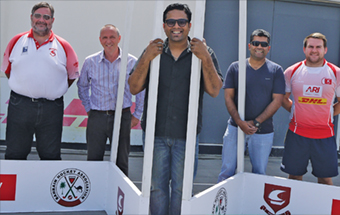
Two of the success stories to date have been the qualification of Afghanistan for the next stage and a first win for Oman, the
cricketing minnow that currently languishes in the fifth division. Their historic victory over Ireland marks a triumph for the
expatriate co-operation between resident Indian and Pakistani cricket-lovers that is an example to all.
The first T20 World Cup was hosted in South Africa as a response to a growing demand for a new format of the ancient game that
started in England four years previously.
While T20 cricket occasionally struggles to enter the hearts of the purist, there is no doubt that it has changed the face of
the game. Increased crowds are an obvious benefit although, more intriguingly, it has served to demonstrate to the players what
is possible with a little imagination.
Myriad slower ball variations attempt to deceive while ‘dilscoops’ and switch-hits are attempted on 90mph yorkers. Such play
has seen the scoring rates in all forms of the game increase (by 10 per cent in Test matches and 20 per cent in One-Day
Internationals).
And T20s have undoubtedly boosted income levels. For example, the Indian Premier League (IPL) generated in excess of $500m.
This has led to some nations losing their best players as they travel the world seeking the biggest pay cheque.
Holders Sri Lanka are currently struggling following the retirements of Kumar Sangakkara and Mahela Jayawardene, the latter a
consultant coach with England.
They also have some injury concerns over Lasith Malinga who has relinquished the captaincy amidst board upheaval. However,
they benefit from being the only Asian team in their group, which gives them a slight advantage. Their recent form has been
patchy, losing to both India and Pakistan although they boast the most wins in this format from all sides and still have the
tournament’s leading run-maker and wicket taker.
However, it is the hosts and number 1-ranked side, India, that start as strong favourites. In claiming the ICC Cricket World
Cup in its own backyard in 2011 they are well positioned to become the first country to achieve this feat in T20.
In preparation for the tournament they have played only T20 games, accumulating an impressive record, sweeping Australia 3-0
before winning all five matches in the Asia Cup. They have lost only once to Sri Lanka in a series that they still won.
In Mahendra Singh Dhoni they boast an impressive captain who made his name when he led his country to the inaugural T20 title
in South Africa in 2007.
Thanks to the IPL, India’s players have greater exposure to this format of the game than anyone and have recently achieved a
balance that is the envy of many nations.
At the top of the order Rohit Sharma is in fine form with the muscle and ingenuity coming in the middle order from Raina,
Kohli, Yuvraj and Dhoni himself.
With spin likely to be crucial India can turn to Ashwin, Harbhajan and Jadeja. However, they have also unearthed a potential
game-changer in Hardik Pandya who can strike the ball well in addition to providing various medium-fast options. Jasprit Bumrah,
with his unusual action, makes it difficult for batsmen to score and he has an uncanny ability to bowl yorkers regularly to close
out an innings.
What impresses me most about the Indian team is the number of batsmen they have that can adapt their style to different game
situations. Their only possible weakness is that they do not bat as far down the order as other teams.
Of course, T20 is the most unpredictable format of the game where any team can win on any given day with a single quality
individual performance able to clinch the honours.
It is, therefore, somewhat surprising that the most unpredictable side, Pakistan, has been one of the most consistent, having
reached two finals and two semi-finals, claiming the title once in England in 2009.
With the competition being held in familiar sub-continental conditions, Shahid Afridi’s side will be hoping to repeat that
success, particularly as they always appear to save their best for the biggest stage.
Pakistan’s strength is its enviable bowling attack. The controversial Mohammad Amir is back to his best forming a formidable
pace pairing with Wahab Riaz, the experienced warhorse. Sami too found good pace in the Asia Cup, with Mohammad Irfan also
stepping up to threaten the batsmen. On turn-friendly surfaces in India, Afridi, the leading wicket-taker in T20Is, can make an
impact with his legspin, while Imad Wasim and Mohammad Nawaz provide more spin options.
Their weakness is their batting although each of their top order has shown some signs of a return to form.
The most likely challengers to Asian dominance come from the Southern Hemisphere with South Africa providing the best balance
with a deep batting line-up combining with a potent and varied bowling attack.
On their last visit to India they won the T20 series 2-0 and have many players familiar with local conditions thanks to their
appearances in the IPL. Yet they have never won a world title and the tag of ‘chokers’ is weighing increasingly heavy.
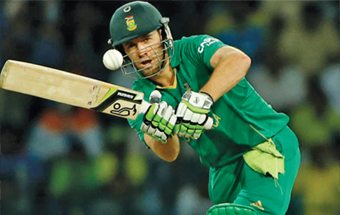
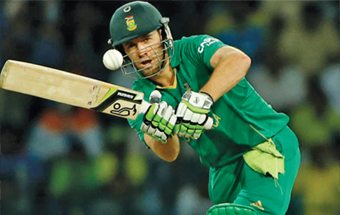
In AB de Villiers they possess the best batsman in the world although there are a number of others capable of destroying an
opposition bowling attack, such as David Miller and Chris Morris.
In Kagiso Rabada they have unearthed a diamond fast bowler capable of consistent precision who will form a potent new-ball
attack alongside Dale Steyn, provided they can keep him fit. However, on India’s spin-friendly wickets they will need Imran Tahir
to be firing, taking wickets while controlling the run-rate.
Australia will also enter the tournament with confidence having won five ICC world titles, more than any other nation.
However, the T20 has been the hardest for them to master. In Glenn Maxwell and Aaron Finch they have two batsmen that can take
the game away from the opposition and they are matched by the more experienced Steve Smith and David Warner. James Faulkner is
one of the game’s best finishers.
Their bowling line-up looks to consist of all-rounders which is great news for their batting although does little to boost
confidence in an ability to restrict the opposition if their batsmen fail. The ‘baggy greens’ are also placing their spin in the
hands of two unproven bowlers, Ashton Agar and Adam Zampa.
New Zealand, a side of all-rounders, don’t look to have the same strength since the retirement of Brendon McCullum. However,
they are far from being a one-man side and, while on paper they may not boast the strength of other sides, they have historically
demonstrated a way to win using clever tactics and could spring a surprise or two.
The West Indies look to be a shadow of their former selves. I personally find it disgraceful that individuals will turn their
back on representing the national side in favour of seeking personal gain. This team is, therefore, filled by individuals now
seeking to put their name on the lips of the IPL teams at the next auction and is unlikely to go the distance.
The only world title that England has ever won is this one, thanks largely to Graeme Swann’s bowling and the batting of Kevin
Pietersen. While they do have a strong batting line-up this time (Alex Hales is one of only six men to have hit a world T20
century) they will be heavily-dependent on Adil Rashid reproducing Swann’s sprinkling of stardust. England has lost the most
matches in the five-edition history of the World T20 and I expect them to add to this total.
India also witnesses the fifth edition of the ICC Women’s World T20 at which Australia women will be looking to make it a
hat-trick of titles while England look the side most likely to prevent them.