






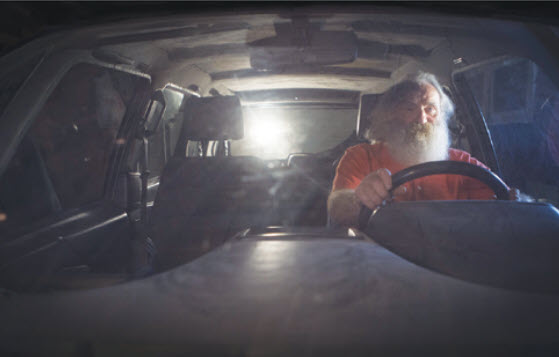
Much is written about the danger young drivers’ face on the road. Much less is reported about motorists at the other end of the spectrum. That needs to change with a focus on an increasingly ageing population that includes more and more drivers over age 65, analysts suggest.
New research found that nearly 83 per cent of older drivers report never speaking to a family member or physician about their driving ability. Of the small percentage of families who do have the often-difficult conversation, 15 per cent do so after a crash or traffic infringement has occurred – which could be too late.
Researchers in the US found that only 17 per cent of older drivers report ever speaking with a family member or physician about driving safety. The most commonly cited reasons for having the discussion include:
l Driving safety concerns (falling asleep while driving, trouble staying in lane): 65 per cent.
l Health issues: 22 per cent.
l Driving infringement or crash: 15 per cent.
l Planning for the future: seven per cent.
The danger on the road is real – and due to their fragility, older drivers are at greater risk of death or injury if involved in a crash. With seniors now outliving their ability to drive safely by an average of seven to 10 years, families cannot wait to talk about safety.
“There’s no perfect age to determine when it’s time to stop driving,” said Tiffany Wright, president of the US-based AAA Carolinas Foundation for Traffic Safety. “Understandably, many older drivers can be hesitant to initiate these difficult conversations about their driving ability, so it is important that families are proactive in starting these discussions – because with proper planning, elderly drivers might be able to safely stay behind the wheel longer.”
AAA recommends that families start talking with older adults about safe driving early and avoid waiting until there are ‘red flags’ like crashes, scrapes on the car (from bumping into garages and signs), new medical diagnoses or worsening health conditions.
However, past research found that older adults who have stopped driving are almost two times more likely to suffer from depression and nearly five times as likely to enter a long-term care facility as those who remain behind the wheel.


