Think Pink Bahrain breast cancer awareness campaigners will be unveiling a new clinical guideline next year to be used as standard procedure for screening, diagnosis and management of the disease inthe kingdom.
The non-profit organisation, founded by its current chairman Jules Sprakel in 2004, continues to work in the community, raise funds for the cause and has recently carried out a systematic review of procedures involved in the diagnosis and treatment of the disease.
The Breast Cancer Clinical Guideline was sanctioned by the Supreme Council of Health and its key objective has been to provide a robustly-developed, high-quality, reliable, internationally-recognised compliant resource which can be used by both clinicians and patients for shared decision-making in the management of the condition.
Jules said: “I think it’s important to note that this will have a huge impact at a national level.”
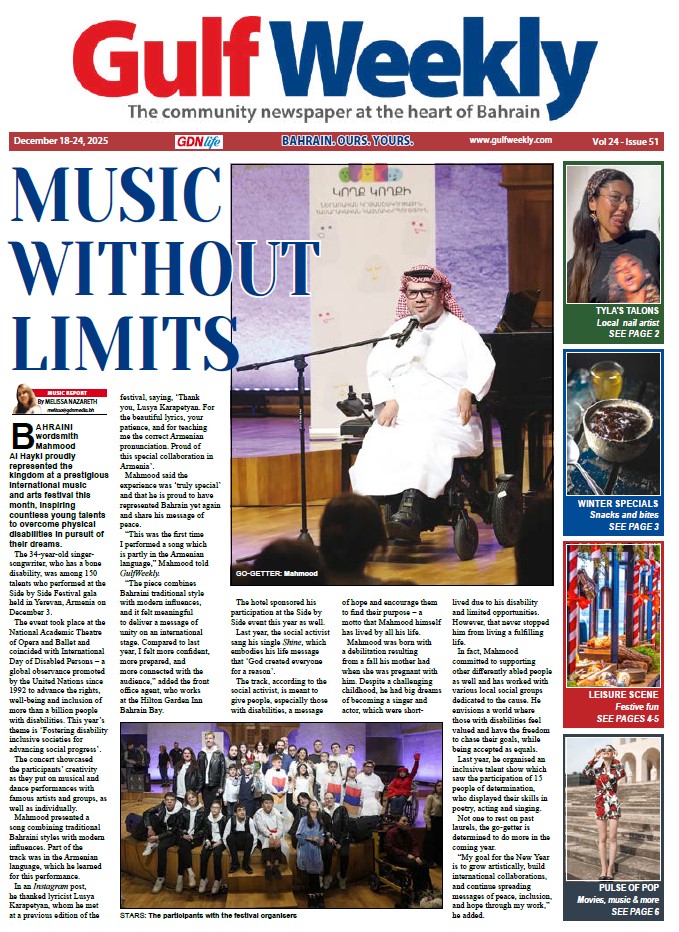
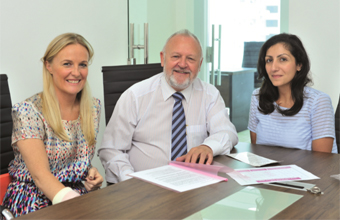
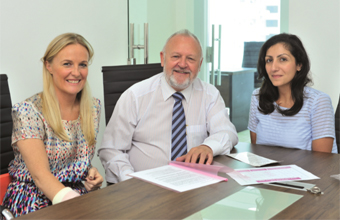
The aim is to provide a user-friendly resource not buried in baffling terminology. Aside from Jules and Think Pink Bahrain vice chairperson Tahera Al Alawi, Professor Zbys Fedorowicz has joined the mission to create it.
Zbys said: “The guideline will include a full algorithm which will be a step-by-step: ‘If I got this what do I do next?’”
People will not have to wade through a whole pile of material to find what they are looking for. It is being designed to be clear, concise and simple enough to be able to follow, unlike many guidelines which often end up sitting gathering dust on shelves.
“To the best of our knowledge, it will be once it’s completed, the only guideline that has everything needed from start-to-finish,” he said.
A British national who graduated from theRoyal Dental Hospital of London in 1971, he has had postings in Holland and South Africa and 35 years’ experience in the Middle East.
He is currently the director of Cochrane Bahrain, identifying and hand-searching regional Arabic and English language healthcare journals to ensure that relevant studies are made available to widergroups.
Zbys’s publications include 45Cochrane-systematic reviews and protocols covering breast cancer, dermatology,upper gastrointestinal and pancreatic diseases, urologic cancer, among other diseases.
He has recently co-authored and published two books on cross-cultural healthcare and has been published in a number ofpeer-reviewed journals. His principal research interests are in the methodologyof systematic reviews and in healthcare research priority-setting in lower to middle income countries.
Zbys was also part of a guidelines development group for Costa Rica which had a huge impact there and was endorsed internationally. The latest work in Bahrain is likely to achieve similar success.
He said: “This guideline is multi-disciplinary,which is a different approach and includes consumer advocates, patients,radiographers, nutritionists, surgeons, physiotherapist -across the board - and that has not been done anywhere in the region.
“So independent, clear, transparent, robust, up-to-date are the kinds of words one should use to describe this clinical guideline and set international standards for which a guideline should adhere to in terms of the languages developed, the way it’s put together and the way in which it’s implemented.
“We are being tasked by the Supreme Council of Health to develop a national guideline for the screening, diagnosis,treatment and the management of breast cancer.
“There is also a national advisory board that will assess the findings and make recommendations. These people have been selected on the basis of their international skills, knowledge and expertise in guideline development.”
The guideline, which is being created using the RAPADAPTE approach, a process similar to that used in the acclaimed clinical research exercise in Costa Rica, will be completed by next April, just in time for a major conference held in the US.
Having gotten wind of the guideline development, the European Commission too is looking to highlight the project at its Initiative on Breast Cancer Conference in Italy in November. The team has been offered a two-hour slot to speak to the vice president of the commission about what it is developing.
The team is also aiming to stage a local conference on January 7 and 8 with the presence of the World Health Organisation to share knowledge and experience gained in the process with health care providers from across the region.
Zbys said: “We will be involving our Bahraini colleagues to try and show the issues and incidents on mortality within Bahrain and the GCC and then get the WHO to provide some of their own reviews and see where Bahrain fits. There will also be workshops.”
The guideline development costs are beingmet by further Think Pink Bahrain fundraising, thanks to ongoing support in the community.
Tahera added: “We always wanted to be the leaders for change and to produce the best. This is our gift to the country and we are very happy to give it just as we were with the MRI. They got the best MRI and they are going to get the best guideline.”