This week I was delighted to see that the Ministry of the Interior had produced a leaflet for children to give to their parents about road safety.
The leaflet entitled ‘To my parents with love’, is written from a child’s point of view and highlights the importance of wearing seatbelts, not using a mobile phone when driving and not driving too fast.
Any form of significant change within a culture takes a long time and a concerted effort for it to become truly embedded and, alongside recent radio campaigns endorsing road safety, this fantastic development on the island is one that I hope will start the process of much-needed change in this area.
So, what can parents to continue the process of change? If your child brings home one of these road safety leaflets, read through it with your child and implement what it says when you are with your child in the car.
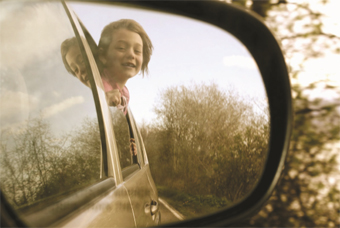
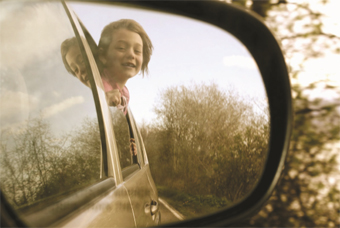
How many times have we seen children standing up on the backseat of a car when it is moving at speed, or worse still, standing with their head sticking out of the sun roof? Driving a car without securing children into their seats with a seat belt at the front AND back of the car is one of the most dangerous things you, as a parent, can do.
Parents can demonstrate their care for their children by strapping them into their seats securely, even on the shortest trip, to prevent serious injury, or worse, from happening. The best thing a parent can do to help to teach their children about the importance of road safety is to lead by example.
Significant change does take time, but by encouraging your children to do the right thing, they will undoubtedly do so as an adult, meaning their children will be more likely to do the same thing and so on.
And children, please tell your parents to clunk, click every trip!
Teachers, if they haven’t already arrived, the Ministry of the Interior leaflets will be appearing at your school soon. They are written in English and Arabic and they are a very good means of starting a discussion in the classroom about staying safe in cars and around the road.
Behavioural change very often starts in school (think how recycling started in schools as a poster project in the 1990s and is now a key part of many national curricula) and road safety in Bahrain is no exception.
Some activities that can be done with children to highlight the issues are:
Maths – traffic survey – counting cars to find out exact numbers of children not wearing seat belts. This information can be used to produce bar charts and statistics. Students can work out more complex statistics and averages by researching how many cars there in Bahrain and relate this to their data handling to find the true extent of the problem in Bahrain.
English – a formal open letter could be written to the Ministry of the Interior, highlighting the statistics discovered and making suggestions for dealing with perpetrators of the act. This could be signed by all the children at the school.
Art – design a road sign – road signs that are made by children for drivers are a very effective means of reminding adults of the responsibilities that they have to not only their own but to all children in Bahrain when driving.
Assembly – if none of the above activities appeal, a class assembly on the importance of car safety and road safety can be researched, written and performed by the children in your class to inspire other children in the school to stay safe when in the car.