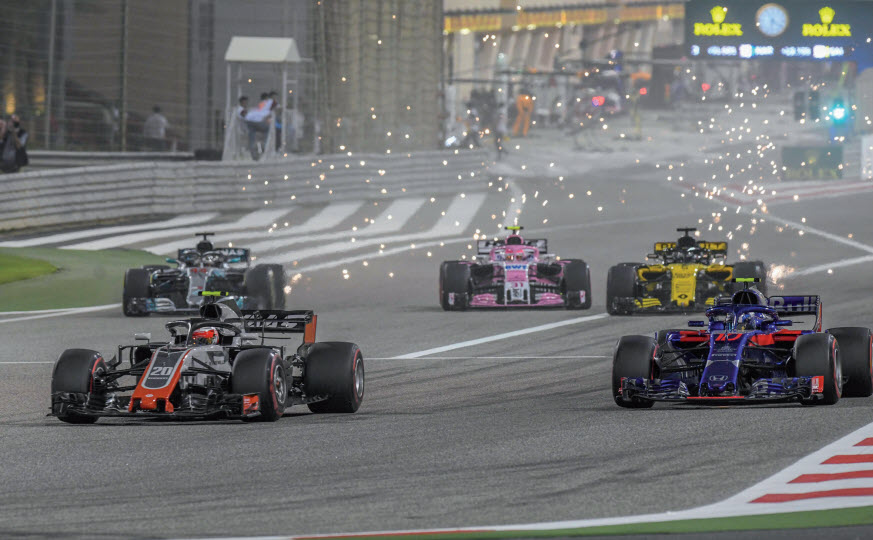
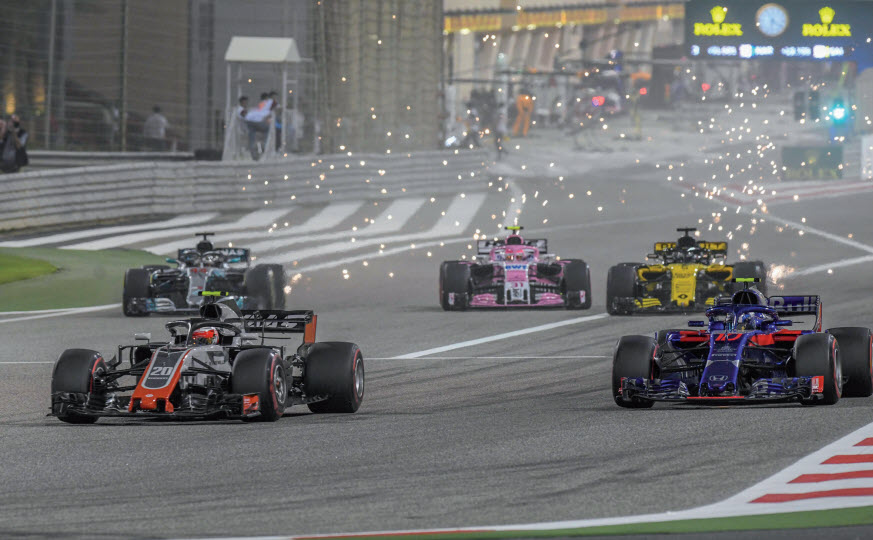
After four years of complete Mercedes domination and declining interest in the sport, Formula 1 needed an adrenaline boost. Thankfully, the 2018 season seems to be just the shot in the arm that it needed.
There have been three different race winners in four exciting races: The first two for Ferrari driver Sebastian Vettel and one each for Daniel Ricciardo (Red Bull) and defending champion Lewis Hamilton (Mercedes). But Vettel has been impacted by the wild driving of Red Bull’s Max Verstappen in the last two races, allowing Hamilton to take the overall championship lead.
Both the Brit and the German are locked in a heated battle to be only the third man to win five world titles, after the legendary Michael Schumacher and Juan Manuel Fangio.
Last week’s drama-packed Azerbaijan Grand Prix was a microcosm of the season so far. The race through the narrow and winding, castle-walled city streets of Baku was a throwback to F1 classics and had fans – not to mention anxious team principals – on the edge of their seats.
It feels going into each race as if any one of the drivers from Mercedes, Ferrari and Red Bull could be potential winners, something we’ve not been able to say with any confidence since the hybrid era began in 2014.
Hamilton needed his win in Baku badly, after a generally underwhelming start to the season from him and his team and no victories for the world champion since the US Grand Prix last October.
Not only had Hamilton not won, he had been distinctly off form since dominating the opening race in Australia before a team miscalculation saw him lose victory.
In both subsequent races in Bahrain and China, Hamilton was the slower Mercedes driver in qualifying, and in Shanghai team-mate Valtteri Bottas out-raced him, too.
Hamilton did manage to qualify ahead in the end in Baku, but it was again a far from convincing performance through the practice days, and the same could be said of the race.
In the end, his win was down to pure luck, although a more measured observer might say this was retribution for Australia where an untimely Safety Car scuppered his hopes by allowing Vettel to emerge from the pits ahead of him, or karma for last year’s race in Baku where a loose headrest denied Hamilton another victory after Vettel had deliberately driven into him under another Safety Car.
If Hamilton has not been driving as well as he feels he could, so too are his team below the level they have been used to.
Vettel led the championship at this stage last season, and the Ferrari was proving the better and more flexible race car, but never was it the out-and-out fastest on average in qualifying. Now it is, if only by a few hundredths of a second. Vettel has been on pole for three of the four races.
On performance, Ferrari and Vettel have to be considered favourites at this stage, but Vettel is more than aware of the manner in which Mercedes got on top of a difficult car last year and steamrollered him in the second half of the season.
Despite the thrilling season so far, if you scratch under the surface, F1 is still beset with problems. As a purist, whilst the unpredictability of the season so far has been fun, the truth is that three of the four races have been decided by a coincidental Safety Car.
Whilst they are part-and-parcel of the sport, and an absolute necessity to protect both the drivers and spectators from harm, they are there to nullify the race, not to decide them. Any more of this and it’ll be like NASCAR, where the first 498 laps are pretty much irrelevant as there can be a caution flag in the last couple to reset the race and cost the deserving victor his moment on the podium.
Indeed, the real problem lies with on-track overtaking. Put simply, unless there is a huge pace advantage (which doesn’t exist among the top three teams) or a big differential in the freshness of the tyres (which allowed Ricciardo to surge through the field in China), the aerodynamic efficiency of the cars prohibits the car behind from being able to follow closely through corners.
The so-called ‘dirty air’ pushes the car behind with incredible force and allows the car ahead to hold off enough of a gap to avoid being passed into the next corner.
The solution, hopefully, lies with relaxation of aerodynamic rules and simpler front wings which don’t impact the downforce of the car behind as much.
Whilst this has the potential to succeed, the plethora of new tracks touted for the calendar is worrying. Most of them seem to be street circuits with narrow walls and limited overtaking opportunities, no doubt due to the lower costs involved with a temporary facility as opposed to a full-blown dedicated circuit.
Baku has been a success as its incredibly long straight allows for overtaking, but Monaco and Singapore are processional bore-fests every year, the furore over their inclusion on the calendar being purely down to history and glamour, respectively.
Ultimately, the 2018 season has undoubtedly begun as the most exciting, and tense, for years. However, we have been somewhat misled thanks to a series of coincidental incidents at the ‘perfect’ time. Without those, processions without any overtakes would have followed, and that’s the real issue the sport is thankfully taking steps to address.