Global banking regulators appear to be in no rush to adapt their rules to financial technology firms that have begun nibbling away at banks’ markets … for the moment.
The regulators recently looked at how FinTechs could disrupt banks’ business models by offering payments services, crowd-funding, mobile banks and online trading.
“Despite the hype, the large size of investments and the significant number of financial products and services derived from FinTech innovations, volumes are currently still low relative to the size of the global financial services sector,” the Basel Committee on Banking Supervision said in its report on the implications of FinTech on banks and regulators.
Analysts have warned banks could become irrelevant as FinTech firms become the ‘face’ of financial services. As highlighted in FinTech Focus, Bahrain is welcoming and encouraging the sector with serious support for start-ups, the creation of FinTech Bay and well-established banks in the kingdom are diversifying and welcoming innovation.
Reports suggest that Basel is currently less concerned although a wary eye is being kept on developments.
The Basel Committee on Banking Supervision is a committee of banking supervisory authorities that was established by the central bank governors of a small number of developed countries in 1974.
It provides a forum for regular cooperation on banking supervisory matters. Its objective is to enhance understanding of key supervisory issues and improve the quality of banking supervision worldwide.
Until 2009, members included only Belgium, Canada, France, Germany, Italy, Japan, the Netherlands, Spain, Sweden, Switzerland, the UK and the US. Currently, committee members also come from Argentina, Australia, Belgium, Brazil, Canada, China, France, Germany, Hong Kong, India, Indonesia, Korea, Luxembourg, Mexico, Russia, Saudi Arabia, Singapore, South Africa and Turkey.
“A common theme across the various scenarios is that banks will find it increasingly difficult to maintain their current operating models, given technological change and customer expectations,” the Basel report said. “As a result, the scope and nature of banks’ risks and activities are rapidly changing and rules governing them may need to evolve as well.”
The Basel Committee writes rules for the larger banks operating in most major financial centres. It looked at risks and opportunities from FinTech before considering next if any new rules were needed.
“The fast pace of change in FinTech makes assessing the potential impact on banks and their business models challenging,” Basel suggested. The regulators themselves should assess whether their staff are being trained properly to keep up with technological changes in financial services, Basel also said.
Regulators have so far shied away from imposing heavy regulation on a fledgling sector, mindful that policymakers are keen to keep their financial centres attractive to upstarts given the potential for jobs and growth they present.
Champions of FinTech believe it can bring benefits such as wider access to financial services, more tailored banking and cheaper fees for customers. Banks are also rallying by launching mobile banking products and making themselves more efficient.
Risks include the same as those for banks, such as cyber-attacks, failing to comply with data privacy rules and IT glitches.
The Committee’s Secretariat is located at the Bank for International Settlements (BIS) in Basel, Switzerland. However, the BIS and the Basel Committee remain two distinct entities.
Although that hasn’t stopped the home base from sticking a knife in.
Crypto-currencies’ model of generating trust limits their potential to replace conventional money, the BIS suggests in its Annual Economic Report, a new title launched this year.
The BIS’ mission, it says, is to serve central banks in their pursuit of monetary and financial stability, to foster international cooperation in those areas and to act as a bank for central banks. Established in 1930, the BIS is owned by 60 central banks, representing countries from around the world that together account for about 95 per cent of world GDP.
Unsurprisingly, in a special chapter on crypto-currencies, the BIS argues that the decentralised technology underpinning private digital tokens is ‘no substitute for tried and trusted central banks’.
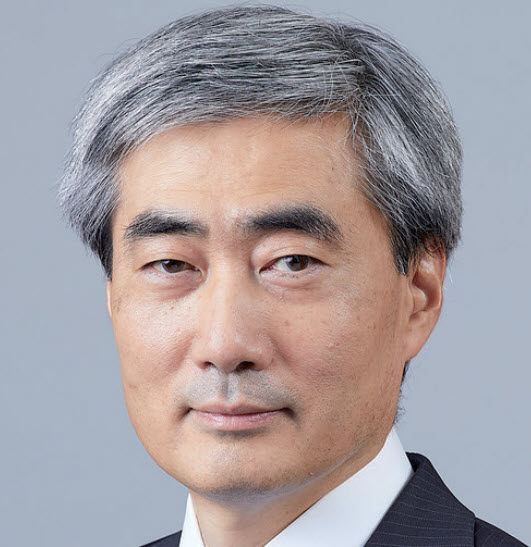
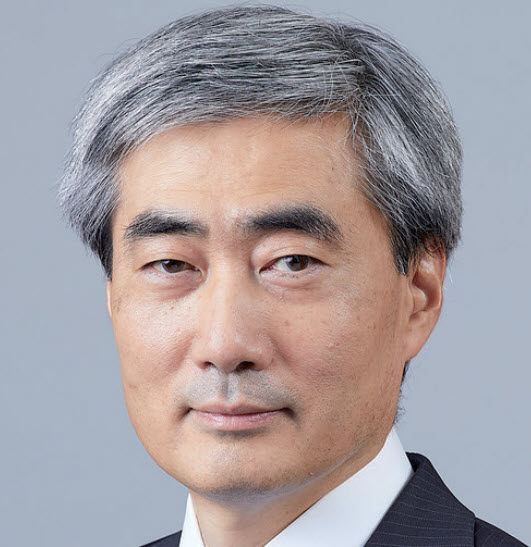
Today’s crypto-currencies become more cumbersome to use as the number of users increases, in contrast to conventional money, which works better the more people use it and trust it, according to the BIS. “Money has value because it has users,” says Hyun Song Shin, economic adviser and head of research. “Without users, it would simply be a useless token. That’s true whether it’s a piece of paper with a face on it, or a digital token.”