According to Der Spiegel, a prominent German newspaper, several clubs – including Real Madrid and five Premier League teams – have discussed forming a 16-team European Super League that could begin as soon as 2021.
As part of the plans, the clubs allegedly discussed ‘an option for leaving the national leagues and their football associations behind entirely’.
The new league, independent of European governing body UEFA, would consist of a 16-team competition with a group stage and knockout round to begin in 2021.
The breakaway league would consist of 11 core founding members and five additional guest teams, with the founder clubs immune to relegation and guaranteed spots in the league for 20 years.
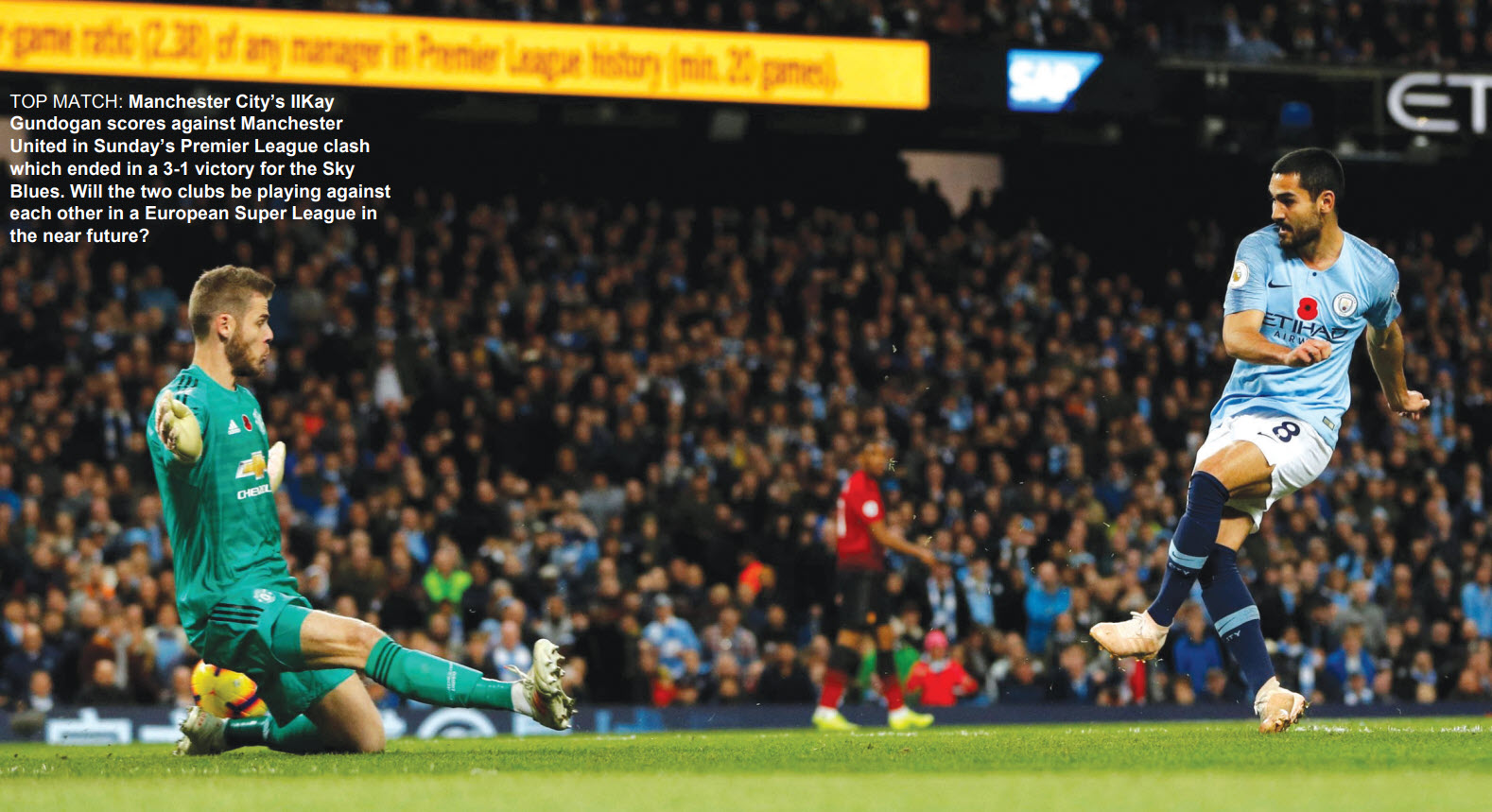
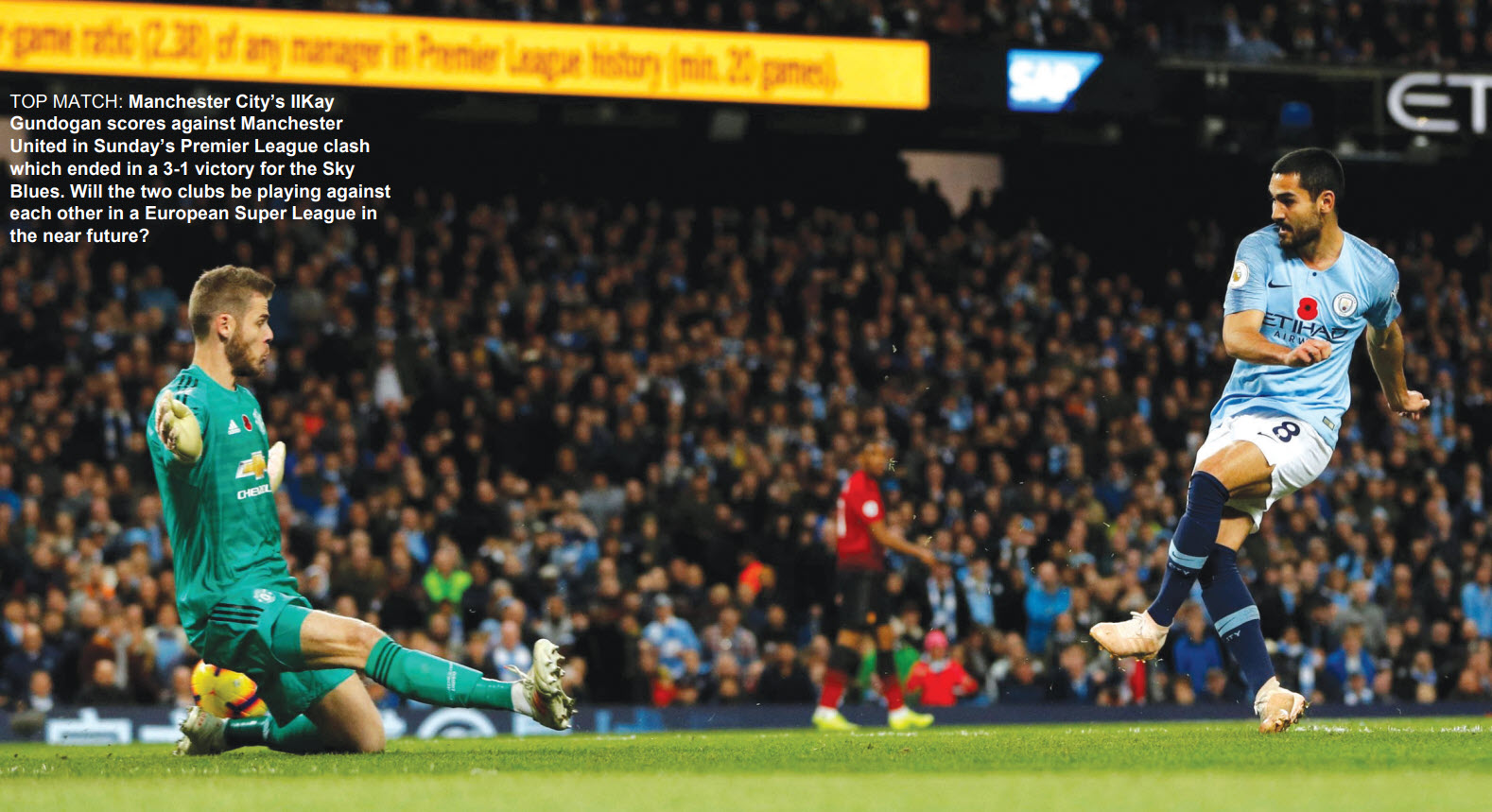
The 11 founder teams, it is suggested, would be Spain’s Barcelona and Real Madrid; England’s Arsenal, Chelsea, Liverpool, Manchester City and Manchester United; Italy’s Juventus and AC Milan; France’s Paris Saint-Germain and Germany’s Bayern Munich.
In additional to the core founding members, they would be then joined by five more guest clubs on a rotating basis – Atletico Madrid, Borussia Dortmund, Inter, Roma and Marseille.
Any such league would potentially doom the Champions League as well as affect the order of their respective domestic leagues.
I find this idea completely abhorrent. A breakaway European Super League would have serious and lasting implications for the long-term sustainability of professional football, and kill any notion of the already-diminished belief that the sport is all about the fans.
The concept has been aired periodically for two decades or more. At times it’s been framed as an idle threat leveraged for better treatment, like an eight-year-old insisting he’ll run away from home, but there are moments when it seems chillingly plausible, like an 18-year-old claiming he’ll never leave.
The latest bout of speculation can probably be pitched somewhere in the middle. All of the ring-fenced clubs are global forces in their own rights. They have big grounds, many fans, high revenues, recent success and world-class players in many positions.
On the business side of things, why wouldn’t they want to stuff their coffers even more?
Contemporary football is already decried as a money-oriented business machine, which in some ways is true. However, there is still some hope left.
I believe on balance, it’s better than ‘old school’ football, especially in the 1970s and 1980s and even the early 1990s before Sky truly dug their claws in. It may seem facetious of me to claim that as someone born in 1991 and who grew up as a Manchester United fan gorging on success fed by Murdoch’s money, but while there was less money involved, and it was more rooted in soul, community and passion, ‘the good old days’ was rife with hooliganism, unsafe stadia and was unavailable to many.
These days, football now is shown on TV or online on a near 24/7 basis. Moreover, racism has declined in grounds (in England at the least, though there are more stringent efforts to curb this in other countries compared to past eras), and women feel more comfortable to attend games. There is also far less societal stigma over women enjoying, playing, and liking football, compared to past eras.
Stadiums also are in better shape and have superior facilities providing a nicer experience for fans. And more money has signalled a greater scope in seeing players from around the world and has arguably expanded football’s reach.
Contemporary football is not perfect, but on balance, the progress since the 1980s has been positive.
This Super League though, in my view at the least, would be a step too far. It would kill football as we know it. If it is indeed a closed shop with invitees then this is undesirable in many ways.
Football’s glory, in part, is rooted in progression, advancement and anything being able to happen.
Leicester City, Montpellier, are Deportivo La Coruna are teams in England, France, and Spain respectively that are not traditionally amongst the largest in their countries. But they all have won the Premier League, Ligue 1 and La Liga within the past 20 years. Could this happen again?
One also cannot ignore the grassroots of the game, or even non-league set-ups. Would they be extinguished? This would have a major effect on the game and make it essentially unrecognisable.
That said, talk of some kind of Super League has been on the agenda for some time, and this is no surprise. However, the make-up and constitution of this supposed grouping is concerning, to state the least.
Football being money driven is a fact of life that many, whilst not liking it nor approving, have come to accept it grudgingly. This alleged Super League, though, is a step towards a monetary-driven footballing dystopia, which many may not approve of, welcome, nor renounce.
Luckily, for now, world governing body FIFA seem to agree. President Gianni Infantino has issued a warning to the clubs over their plans, declaring that players involved in such a tournament could be banned from participating in the World Cup.
“Either you are in or you are out – this includes everything,” he said. “People are still quite reasonable, however I trust certainly the club owners and presidents to be able to have a discussion.”
In a future article, I’ll explore deeper reasons for why I believe a European Super League would kill football as we know it and be one step too far for even this most greedy of sports.