





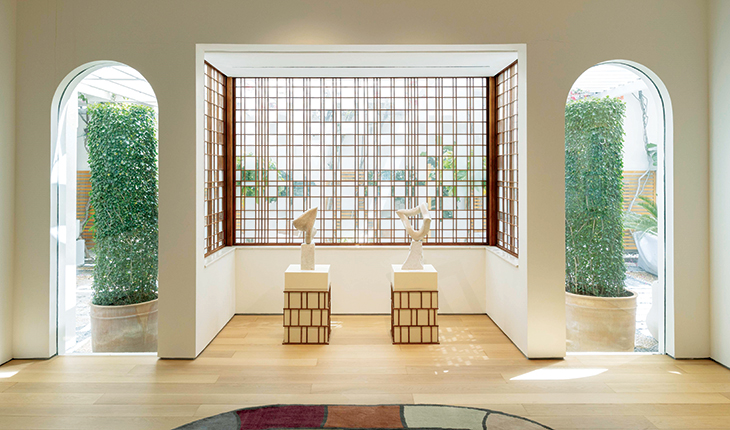
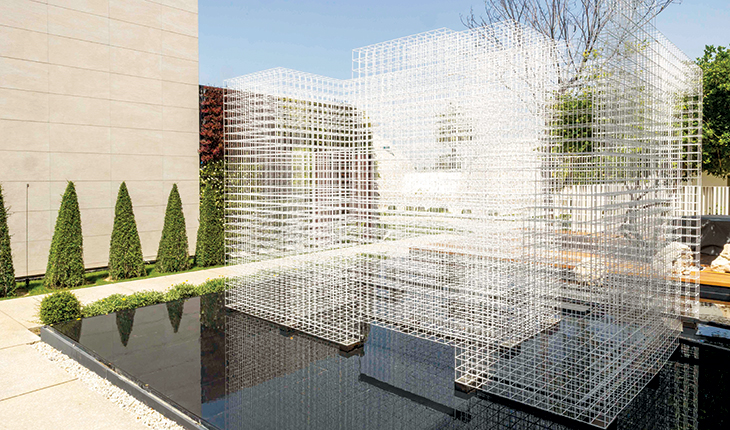
Art depicting the various forces that have shaped and remade the Middle East is at the centre of a recently opened gallery in the heart of Saar.
Spanning motifs including war, Islamic geometry and displacement, the Rashid Al Khalifa Art Collection is equal parts exhibition and museum, charting a history and modern narrative of artistic voices from across the Middle East and North Africa (MENA) region.
“Creation constitutes an act of continuity – a dynamic and critical dialogue between a deep, cherished past and an ever-evolving future,” the collection’s curatorial team explained.
“This collection does not present a narrative of rupture, nor a simple oscillation between tradition and modernity.
“Instead, it reveals a profound and generative tension: a sustained inquiry into how one steadfastly maintains identity, heritage, and memory while simultaneously forging artistic expressions that are radically new, critically relevant, and transformative.”
With more than 260 pieces on display, the art space takes visitors on a journey across two pavilions and 10 sections.
During a recent visit to the gallery, the collection’s art curator Yasmine Al Maskati told GulfWeekly how the space is tied to the artistic vision of the RAK Art Foundation’s founder Shaikh Rashid bin Khalifa Al Khalifa.
“Through his work, he consistently honours the region’s rich visual and architectural heritage while simultaneously pushing the boundaries of contemporary form and materiality,” she added.
“The collection, therefore, is not merely objects but an extension of this philosophy, a living ecosystem where the artistic legacy of the MENA region is understood through the same lens of innovative continuity that he exemplifies.”
At the main pavilion titled On The Threshold, the collection showcases five sections.
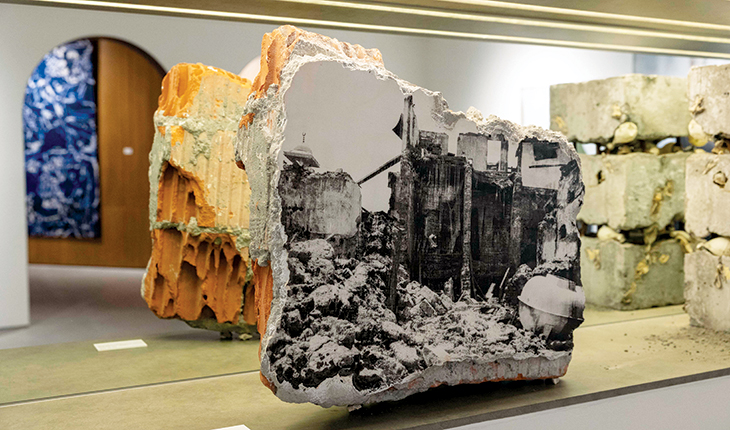
The first of these is War, Trauma and the Poetics of Ruin in which MENA artists show how conflict, displacement, and loss have been distilled in depicting the ‘poetics of ruin’.
“They transform the raw materials of suffering; ashes, debris, fragmented memories, into profound meditations on existence,” the gallery explained.
“Their work does not simply depict trauma; it metabolises it.
“Through abstraction, symbolism, and the innovative use of materials, they articulate the inexpressible: the lingering ghosts of war, the weight of memory, the geography of longing, and the fragile yet persistent hope for renewal.
“This is art as witness, as archive, and as a form of resilience, demonstrating how cultural identity is not erased but rather painfully and eloquently reshaped in the crucible of chaos.”
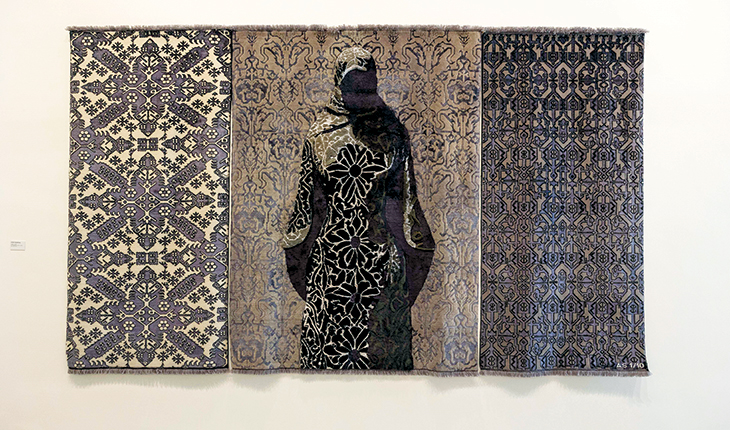
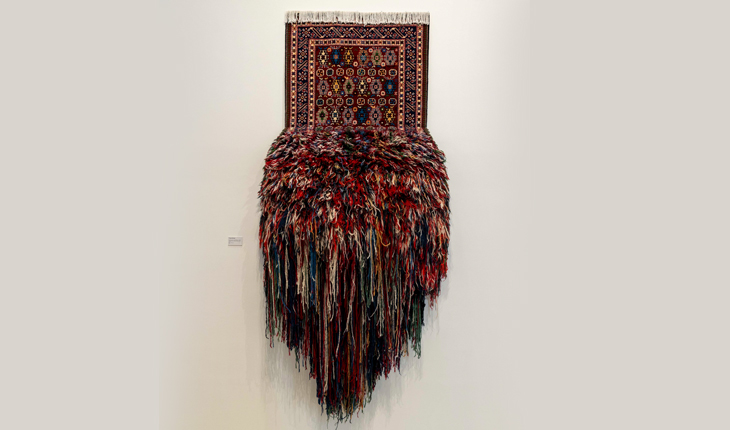
In the second section Reinventing the Sacred: Geometry and Craft, traditional patterns and techniques become living languages for storytelling
and enquiry. Through these ancient forms, including textile art, sculpture, painting, and calligraphy, artists explore modern questions of identity, displacement, spirituality, and place.
The third section Challenging Norms: Gender, Identity and Subversion showcases work that actively questions, disrupts, and redefines societal conventions through self-portraiture, satire, and storytelling.
The art challenges rigid gender roles, cultural belonging, and political authority, exploring identity, self and societal expectations.
“Though varied in their approaches, these artists share a common goal: to reimagine accepted norms and assert the power of personal agency,” the gallery explained.
In Cities of Sand and Steel, the hyper-accelerated urbanisation of the MENA region is depicted through art, documenting the rise of cities from ancient deserts at a staggering pace, embodying both human ambition and a potential crisis of ecological and cultural memory.
The artists here act as critical observers and archivists exploring tensions between imported steel-and-glass futurism and local materials and traditions.
The art does not reject progress but calls for a more conscious path forward.
Cartographies of Displacement: Mapping Memory and Exile highlights personal cartographies, charting not just geographical journeys, but the emotional landscapes of memory, longing, and resilience.
The South Pavilion starts with the Traces of Modernism: Bahraini Art and Transregional Dialogues which showcases the relatively less-known history of Bahrain’s art movement and its inspirations.
Lebanese geometry, Egyptian patterns and Iraqi expressionism, blended with local perspectives, ensured that Manama, Muharraq and the cultural centres of Bahrain had a Gulf voice in the Arab artistic dialogue.
The artists that inspired this local movement are explored in Pioneers of Modernist Vision.
“In the mid-20th century, they embarked on a shared project: to decolonise aesthetics and forge new languages rooted in heritage yet forward-looking,” the curator explained.
“Featuring key movements from Egypt, Iraq, Morocco, and beyond, it highlights their diverse responses to postcolonial modernity.
“While drawing from local contexts such as Pharaonic history, Mesopotamian archaeology, or Amazigh and Islamic patterns, they were united in revitalising tradition through avant-garde experimentation.”
Recoding Heritage and The Written Universe reinterpret symbols and Arabic letters into a modern artistic language, reimagining and distilling myths and motifs from across the region.
Meditations on Place is the perfect end to a walk-through of the space, offering a moment of quiet reflection on the artistic impulse to capture a sense of place.
Bookings are now available to visit the RAK Art Collection on Saturday afternoons.
For details, follow @rakartcollection on Instagram.