


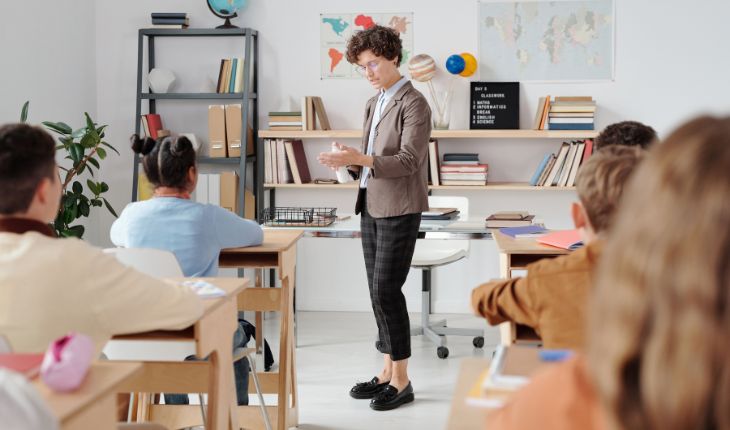
From gradually shifting bedtime routines to reintroducing structure, teachers in Bahrain have revealed their expectations in time for the upcoming back-to-school season to ensure a smoother transition.
While educators are a central cog in the system, student wellbeing is a group effort. However, teachers are often forced to take up the lion’s share of the responsibility, which can be challenging.
In order to prevent this, children must receive seamless attention and support from all those involved in their upbringing either directly or indirectly.
Highlighting the major challenges of the transition from summer break to the classroom, primary school English teacher Hisham Ismail noted that he observes sleep adjustment issues, separation anxiety and resistance to structure.
“After nearly two months of summer break, young children often struggle to adjust to early sleep schedules, which directly affects their energy and attention span during morning classes,” the Egyptian expatriate and Muharraq resident told GulfWeekly.
“For younger students—especially those entering Grade 1—being away from home causes emotional stress that directly impacts their readiness to learn. Transitioning from unstructured summer play to a structured classroom environment requires significant patience, effort, and adaptability from teachers,” he added, recommending that parents can take proactive steps to ensure a smoother process.
“Gradually shift bedtime routines at least two weeks before school starts and build positive expectations by framing the return to school as an exciting journey,” advised the educator with 26 years’ experience.
While younger children typically face routine-related issues, Bahraini secondary school teacher Ali Alqaffas underpinned that a major challenge among senior pupils is choosing the right career path. Many students will be enrolling for university in the new academic year but by then it is often too late to make the correct decision.
“Parents must be mindful of their children’s interests from the go, observing what they are good at so, when it is time to choose a stream, they pick what they are suited for. Sometimes, children might prefer a field but later realise it is not for them,” warned the biology teacher with a Bachelor’s in Science from Bahrain University.
The Hamad Town resident noted that it is impossible for teachers alone to gauge what a student is good at in the classroom. But with inputs from home, they can better guide students in the right direction. Additionally, he emphasised the importance of local programmes that prepare children to embark on their careers, nodding to the role of the community.
“Youth City is a wonderful platform, offering young individuals the chance to explore diverse subjects and get hands-on experience,” Ali remarked, commending the programme.
The 15th edition of the initiative launched at Exhibition World Bahrain, Sakhir, was a grand success and came to an end this month. It featured 256 training programmes and 10,650 training opportunities – the largest edition yet – preparing young minds for the workforce, which in turn, closes the gap between education and the labour market.
Corporate internships, which provide first-hand experience in a real work set up, is another solution to the career dilemma. In Bahrain, many schools and universities encourage students to intern.
Meanwhile, Indian expatriate Nivedita Roy, who has close to three decades of teaching experience, brought alive the ‘human’ side to the teacher-student dynamic.
“As teachers, we deal with human beings, who have emotional and intellectual needs. This can present us with challenges. Parents are partners in this learning journey and can help by sharing information related to medical or behavioural issues,” explained the Adliya resident.
Additionally, she underpinned the importance of parents staying informed and updated with all the announcements via email or other channels.
Since the Covid pandemic, a major portion of correspondence and schoolwork has shifted online. Even during the recent regional tensions, schools operated remotely for a major part of the conflict.
Bahrain has already made great strides in the area, with dedicated, more robust IT support teams and regular digital training for teachers.
“The senior leadership has been very supportive and we have solutions and support during online learning sessions,” the artist and published author added.

Digital Edition
Flip through the latest issue of Gulf Weekly.
Click here to view flipbook edition
Click here to view PDF edition

Contact Us
Al Hilal Publishing & Marketing Group
PO Box 1100,Manama,
Kingdom of Bahrain
Click here for Contact Details