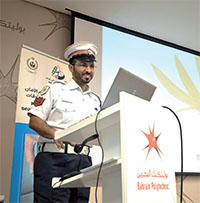
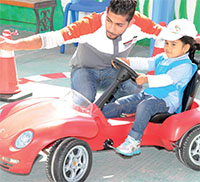
Euro Motors has launched a new road safety campaign entitled ‘Stay Alert, Stay Alive’ in Bahrain in a bid to help raise awareness amongst university students on the importance of wearing seat belts.
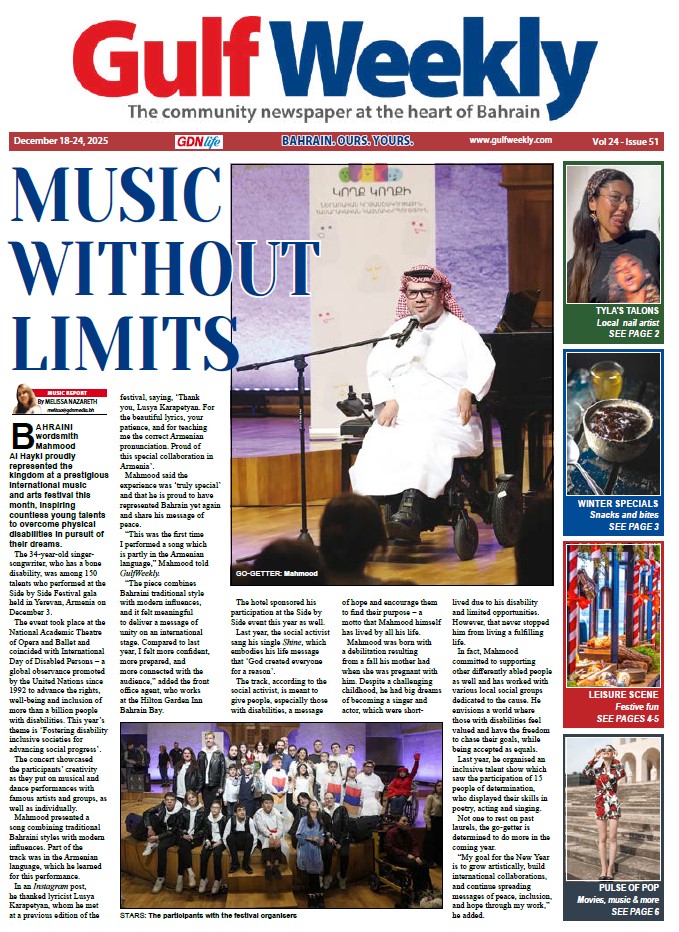
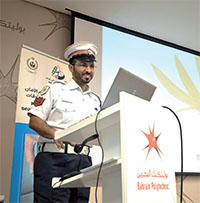
Held in collaboration with the Bahrain Traffic Department and Polytechnic University, the seminar, by executives from Euro Motors and a traffic safety officer from the Bahrain Traffic Department, covered a number of topics related to unsafe driving.
The event coincided with the Unified GCC Traffic Week 2014, which recently kicked off across all Gulf Cooperation Council (GCC) states, under the slogan ‘Your Safety is Our Goal’.
It aims to promote traffic education and intensify efforts to reduce road accidents in all segments of society. A number of officers from the different traffic directorates have been dispatched across neighbouring states to take part in the activities and events organised to mark the event which runs until Sunday.
A report by the World Health Organisation (WHO) on road safety cited that only 23 per cent of drivers in Bahrain use seat belts. Additionally, road traffic fatalities constitute around 51.3 per cent amongst Bahrainis, 20.2 per cent non-Bahrainis and 39 per cent of all fatalities in both combined. These statistics result in costing Bahrain’s economy more than half a million dinars each year, experts say, putting aside the emotional heartache each death causes to family and friends.
The issue of road safety is currently under the spotlight, and the Shura Council is proposing stringent new laws. Proposed new penalties for violating Bahrain’s traffic laws include imprisoning drivers jumping red lights for up to six months and fining them between BD100 and BD500, or both.
If jumping a red light leads to an accident or damage to public or private property then the jail sentence will be between three months and a year, or a fine between BD1,000 and BD3,000, or both. If it leads to death then the punishment will be doubled.
Another law up for debate is the mandatory use of seatbelts for rear passengers.
Although the use is strongly advised, it is not a legal obligation in Bahrain, despite the fact that in a crash, an unrestrained rear-seat occupant continues to travel forward until his or her progress is impeded, usually by one of the front seats, on in a worst cases scenario, into the back of the driver or front seat passenger, causing fatal injuries to all.
In a high-speed crash, the force with which the seat is struck is usually sufficient to cause the seat mountings or seat structure to fail.
Council foreign affairs, security and national defence committee chairman Shaikh Khalid bin Khalifa Al Khalifa said toughening penalties for traffic violations was ‘necessary’ given the recklessness of some drivers on Bahrain roads.
“Bahrain’s roads have been a major cause for deaths of drivers, passengers and pedestrians and for that punishments have to be toughened,” he said.
It is hoped that a proactive stance by the authorities will encourage drivers to follow ‘common sense’ rules such as wearing seatbelts.
Research shows that the chance of death is reduced by 40-50 per cent if you are wearing one. Wearing a seat-belt reduces the risk of death among front-seat passengers by 75 per cent and rear-seat passengers by 57−65 per cent.
The study went on to state that for men aged 15 – 44, road traffic injuries rank second as the leading cause of premature death and ill health worldwide.
“One of the most effective ways to help improve road safety is to try to instil good driving behaviour from an early driving age, which is why we have decided to focus first on addressing university students. Our aim is to then roll the campaign out to talk to other age groups,” said Paul Yates, general manager of Euro Motors.