

_20260813104204.jpg)




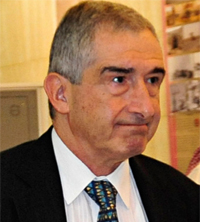
A leading academic involved in the Bahrain Independent Commission of Inquiry which investigated the country’s civil unrest today pleaded with the opposing factions in the kingdom to ‘listen to one another’.
Professor Sir Nigel Simon Rodley, pictured right, an expert in the field of international human rights law and one of five eminent, non-Bahraini commissioners who also had expertise in the fields of international law, hopes the island can learn from Northern Ireland – a country which found peace after decades of sectarian mistrust and misery. He told GulfWeekly: “My fervent hope is that all sectors fortunate enough to share the wonderful country of Bahrain will take advantage of the report to begin to listen to one another.
“During my time on the mandate, I was frequently struck by parallels with Northern Ireland: two communities with two diametrically opposed narratives of history, especially recent history.
“We have tried to reflect the main narratives in Bahrain, precisely with a view to helping the parties get a sense of where ‘the other’ is coming from.
“That would be important to bridging the gulf that has grown between them. The next thing must be rapid progress in implementation of the Commission’s recommendations, both to redress wrongs and to serve as a confidence-building exercise. These steps should help promote the sort of national reconciliation that would permit the resumption of dialogue on a longer-term political settlement.”
The BICI report, issued last Wednesday, examined the events that took place during the unrest in Bahrain of February and March of this year, which claimed the lives of 35 people – made up of protesters, police and expatriates. In addition, a further 11 deaths have since been potentially linked to it.
As well as investigating a myriad of charges made during that period, the report detailed recommendations for the Government of Bahrain to bring it in line with international human rights standards.
In recent days the commission’s report has received criticism from many quarters with government supporters claiming it failed to highlight Iran’s role in inciting the turmoil and from opposition groups who have spurned opportunities to examine its recommendations.
There is also a middle ground, with many Bahrainis calling for Sunni and Shi’ite communities to unite for the common good of the country as unrest continues to spark in the villages and acts of sabotage and vandalism disrupt everyday life.
Sir Nigel told GulfWeekly in an earlier interview in July, shortly after the commission was set up, that the inquiry had one simple objective which was nothing more ambitious than to ‘try to establish the truth’ when there were such profoundly competing accounts of events. He added that it would indicate the appropriate remedies to ensure reparation for victims and avoid repetition of any human rights violations.
The commission had a staff of 51 and a budget of BD1.3 million. This week, looking back at its endeavours, Sir Nigel said: “As the report itself indicates, it was an enormous challenge to all of us to try to investigate so many problems in so short a time, without even a secretariat to start with. Compare that with the amount of time it took to report on one incident in one place on one day in Northern Ireland. It has been a very intense exercise.”
It took 12 years, 900 witnesses and around 30 million words of written evidence at a reported cost of £191 million, for example, to form the verdict that the killing of 13 people – including six teenagers – was ‘unjustified’ after British paratroopers opened fire on a civil rights march in Londonderry in January 1972, in an incident known as Bloody Sunday. On the publication of the report, the British Prime Minister David Cameron made a formal apology.
The peace process continues in Northern Ireland after years of clashes between Catholics seeking a united Ireland and Protestants wanting to remain part of the UK.
His Majesty King Hamad issued a Royal Order to establish a national commission to follow up and implement the recommendations of the BICI.
The National Commission will expedite its work and complete it within a framework of transparency before the end of February 2012. However, the government will endeavour to implement those recommendations that can be implemented without delay, rather than waiting for the recommendations of the National Commission.

