

_page-0001_20260903101241.jpg)




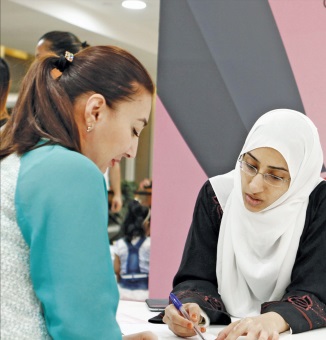
Women visiting City Centre Bahrain will be able to receive complimentary heart health testing this week as part of mall owner Majid Al Futtaim’s regional awareness campaign ‘Feel the Beat’.
To celebrate World Heart Day on Friday, the popular shopping destination will offer free check-ups in the central galleria from 10am-10pm on both Friday and Saturday.
Visitors will be able to get their blood pressure, blood sugar, cholesterol and body mass index (BMI) checked to determine if they are at risk for heart diseases and if they should need follow-ups for more extensive examinations. Medical professional will also be offering hands-only CPR demonstrations.
Ibrahim Al-Zu’bi, head of sustainability at Majid Al Futtaim, said: “Community engagement programmes such as ‘Feel the Beat’ reflect Majid Al Futtaim’s vision to create great moments for everyone, every day. We want to take every opportunity to help our customers, in this case women, and empower them to lead healthier lifestyles.”
The common myth that heart disease mainly afflicts men is being addressed in the initiative, which encourages women to put themselves first and take their own health in their hands.
Cardiovascular disease claims more lives than all kinds of cancer combined; and in the region, heart disease and strokes account for more than a quarter of all deaths annually. Tragically, four-out-of-five of these are avoidable. If survival rates are to improve, it’s vital to address the underlying risk factors, which include a family history of cardiovascular disease, as well as diabetes, obesity, smoking and high cholesterol.
In a recent survey conducted by the American Heart Association about half of the women interviewed knew that heart disease was the leading cause of female death, yet only 13 per cent judged it to be their greatest personal health risk. Other survey data suggested that, on a day-to-day basis, women still worry more about getting breast cancer even though heart disease kills six times as many each year.
Last year more than 10,000 women participated in ‘Feel the Beat’ including Tina Orate, a dietician. She explained: “It’s a great initiative. The crowds were huge with so many participated and afterwards they were asking when it would be hosted again. I’m definitely going again along with all of my colleagues as we feel it’s very important to get checked.”
Cardiovascular disease (CVD), is a general term for conditions affecting the heart or blood vessels, and is usually associated with a build-up of fatty deposits inside the arteries – known as atherosclerosis – and an increased risk of blood clots.
There are many types of cardiovascular disease, the four most common of which are coronary heart disease, strokes, aortic aneurysms and peripheral arterial disease.
Coronary heart disease occurs when the flow of oxygen-rich blood to the heart muscle is blocked or reduced, putting increased strain on the heart. This can lead to angina - chest pain caused by restricted blood flow to the heart muscle; heart attacks - where the blood flow to the heart muscle is suddenly blocked; and heart failure, in which the heart cannot pump blood around the body properly.
Aortic diseases are a group of conditions affecting the aorta. This is the largest blood vessel in the body, which carries blood from the heart to the rest of the body. A common aortic disease is an aortic aneurysm, in which the aorta becomes weakened and bulges outwards.
Peripheral arterial disease occurs when there’s a blockage in the arteries to the limbs – usually the legs. This can cause dull or cramping leg pain, among other symptoms.
In strokes, the blood supply to part of the brain is cut off, which can cause brain damage and death. A transient ischemic attack (also called a TIA or ‘mini-stroke’) is similar, but the blood flow to the brain is only disrupted temporarily.
The symptoms of a stroke or TIA can be remembered with the word FAST, which stands for:
-Face – the face may have dropped on one side, the person may be unable to smile, or their mouth or eye may have dropped.
-Arms – the person may not be able to lift both arms and keep them there because of arm weakness or numbness in one arm.
-Speech – their speech may be slurred or garbled, or they may not be able to talk at all.
-Time – it’s time to dial 999 immediately if you see any of these signs or symptoms.
A healthy lifestyle can lower your risk of CVD. If you already have the condition, staying as healthy as possible can reduce the chances of it getting worse. If you smoke, you should try to quit as soon as possible. A healthy, balanced diet is recommended for a healthy heart. A balanced diet includes low levels of saturated fat (found in fatty cuts of meat, ghee, cream, cakes, biscuits, etc). Instead, try to include healthier sources of fat, such as oily fish, nuts, seeds and olive oil.


